To see Florence off the beaten path, skip the museum lines and look for the city’s true personality behind the heavy wooden doors of its 14th-century binderies and "locals-only" trattorias. I first visited Florence over a decade ago. Back then, I was a dutiful tourist: I waited in the lines, I strained my neck to see the ceiling of the Duomo, and I ate the panini that the guidebook told me to eat. But 10 years later, I'm a different person. I travel in a more intentional and personal way. When I returned to Florence with Patrick and Sibby, I wasn't the traveler who needed the 'greatest hits' tour. I already built those blueprints, like my 3 Days in London itinerary and my guide to Ireland, for when you just need to see the icons. This trip was about what happens when you stop checking boxes and start opening doors. That's when I realized the number one mistake people make when they visit this city: They treat Florence like a background.
They look at the architecture, take the photo, and keep walking. But Florence is an introvert. To find the real soul of Florence off the beaten path, you have to look behind the heavy wooden doors, into frescoes hidden inside a grocery store or the smell of a pharmacy founded in 1221. We walk by these storefronts thinking they are "just stores." They are not. They are where the city’s history lives. If you are looking for a checklist of the tourist attractions, read my First-Timer’s Guide to Florence here. But if you are ready to stop reading the cover and actually open the book, this is your guide.
Svadore's Note:
On this trip, I vetted 140+ artisans, shops, and restaurants. If you’re looking for a generic list, Google is free. If you want the exact coordinates of the secret perfumery hidden in a palazzo or the specific wine window that won’t make you wait 45 minutes, you can purchase my curated Florence off the beaten path Map here. For those who want me to build the entire itinerary from scratch, stroller logistics and all, check out my Trip Planning Service.
~ Day 1: Arrival, Concept Stores, and The "Butcher" ~
We arrived and checked straight into Palazzo Portinari Salviati, our basecamp for exploring Florence off the beaten path. If you want to know what it feels like to be a Medici, stay here. This was the childhood home of Beatrice (Dante’s muse) and easily one of the most stunning luxury hotels in Italy. It reminded me of my stay at Pensione di Vignamaggio in Chianti, where the rooms are inspired by the love stories of Boccaccio’s Decameron. Both stays prove that in Tuscany, the most enchanting rooms are those that serve as a bridge to the past.

The Best Luxury Hotel in Florence? A Night Living Like a Medici at Palazzo Portinari Salviati
For a stay that blends history, luxury, and family-friendly comfort, Palazzo Portinari Salviati is Florence at its most enchanting. Steps from the Duomo, this meticulously restored palazzo offers suites like the Beatrice Portinari Suite, where frescoed ceilings, marble floors, and Medici-era details meet modern comforts like automated shades and high-tech lighting. With attentive service, a serene spa, and a boutique bistro, it’s a rare place where you can wander centuries-old halls with a toddler in tow, sip coffee while tracing frescoes, and still feel utterly pampered.
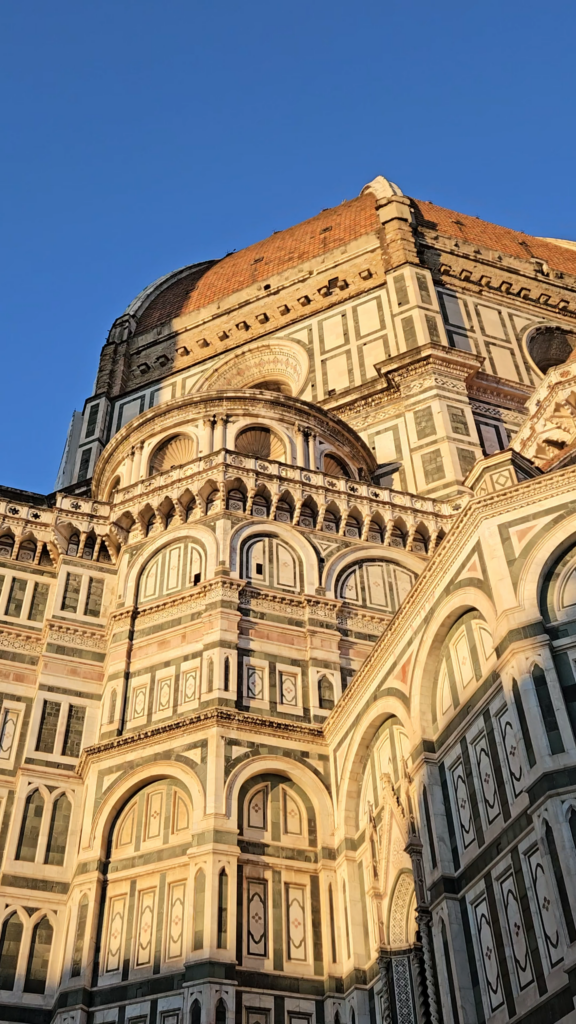
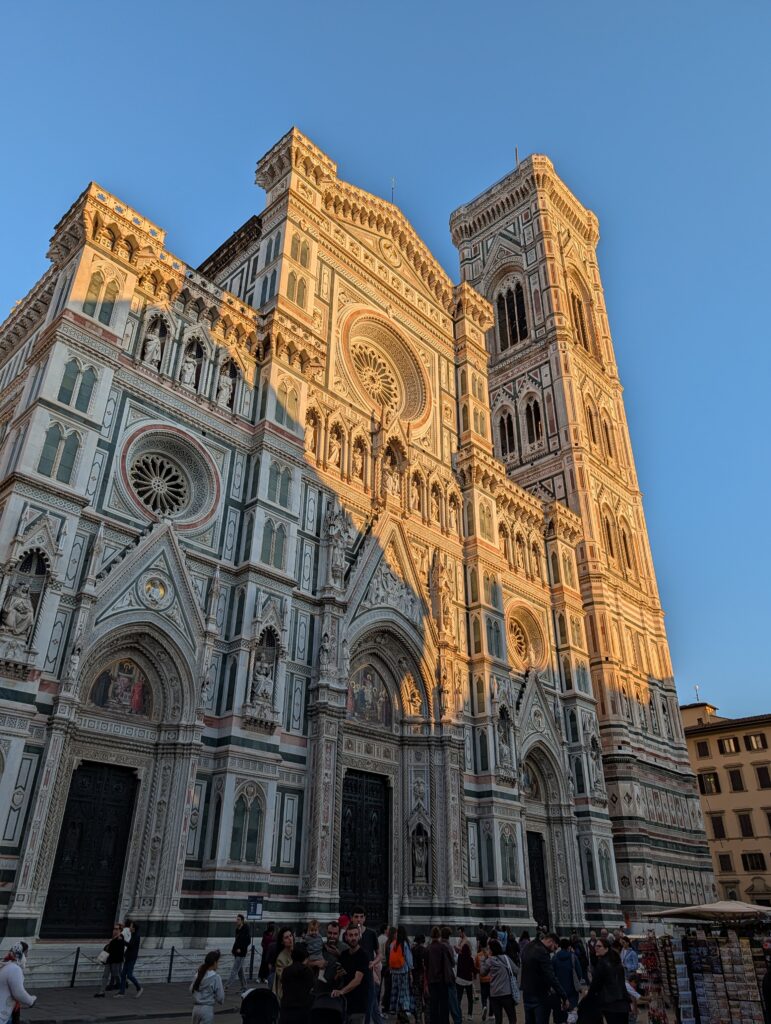
We dropped our bags and went to say a quick "Hi" to the Duomo. We didn't go in. We didn't climb it. We just nodded at it and immediately walked away toward the non-touristy side of town...
The Concept Store Hiding a Masterpiece
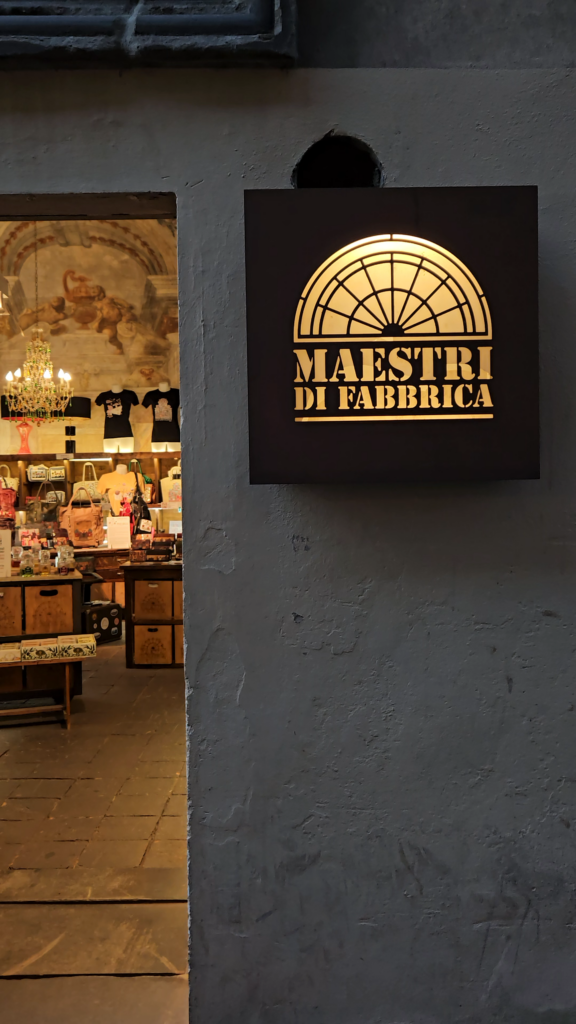
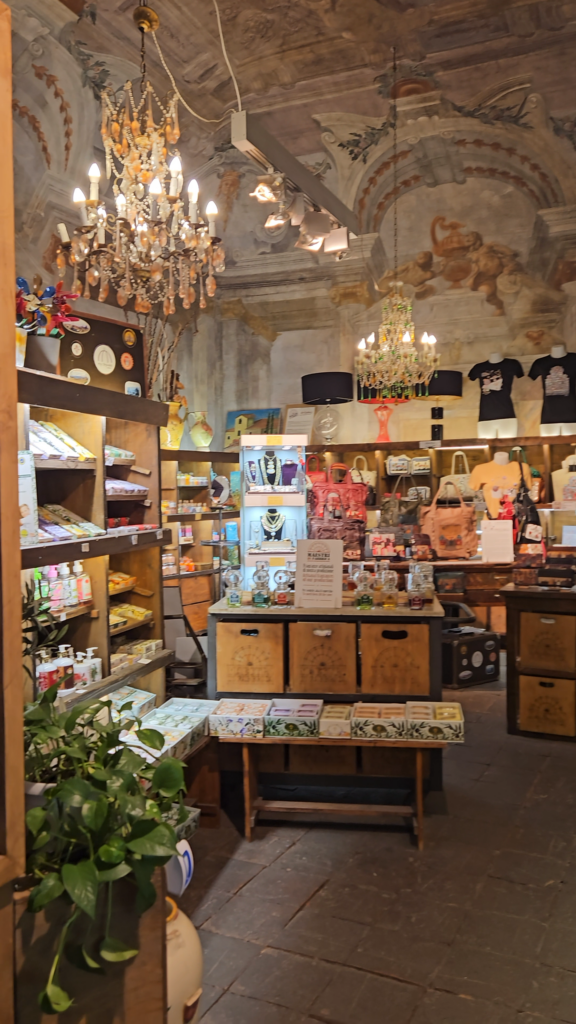
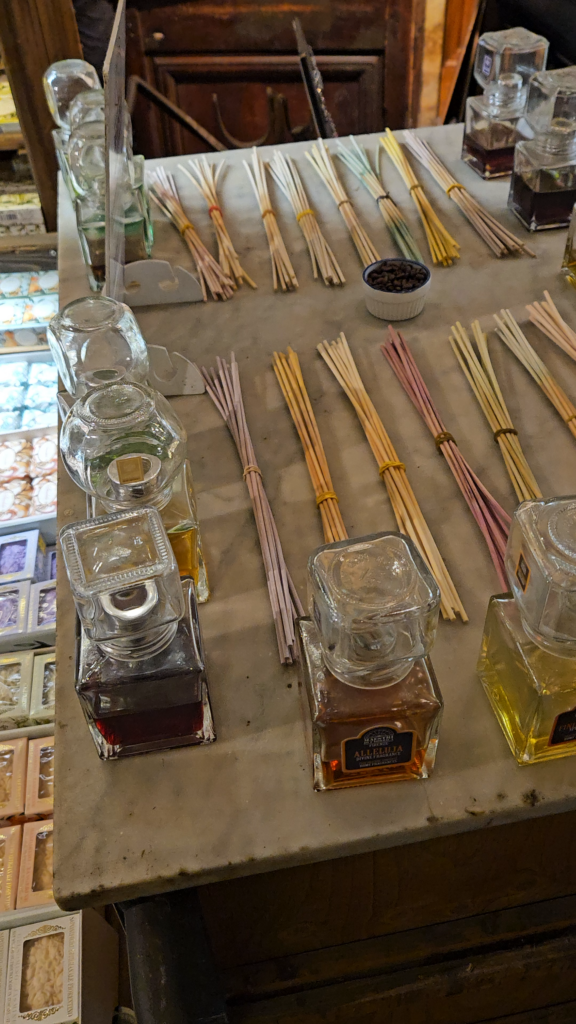
Our first real stop was Maestri di Fabbrica on Borgo degli Albizi. This is the perfect example of why you have to look inside. From the street, it is barely a blip. There is no flashy window display, just a small, glowing sign on a dark stone wall. If you aren't paying attention, you will walk right past it. But step inside, and the world shifts.
You find yourself standing under magnificent frescoes and chandeliers that look like they belong in a royal palace. It’s a concept store filled with the scent of incense and expensive soaps. We wandered through rooms that used to be private chapels, browsing through racks of clothes, handmade jewelry, and leather bags. It set the tone for the whole trip: behind the simplest doors lie the grandest surprises.
The Vintage Photobooth (Fotoautomatica)
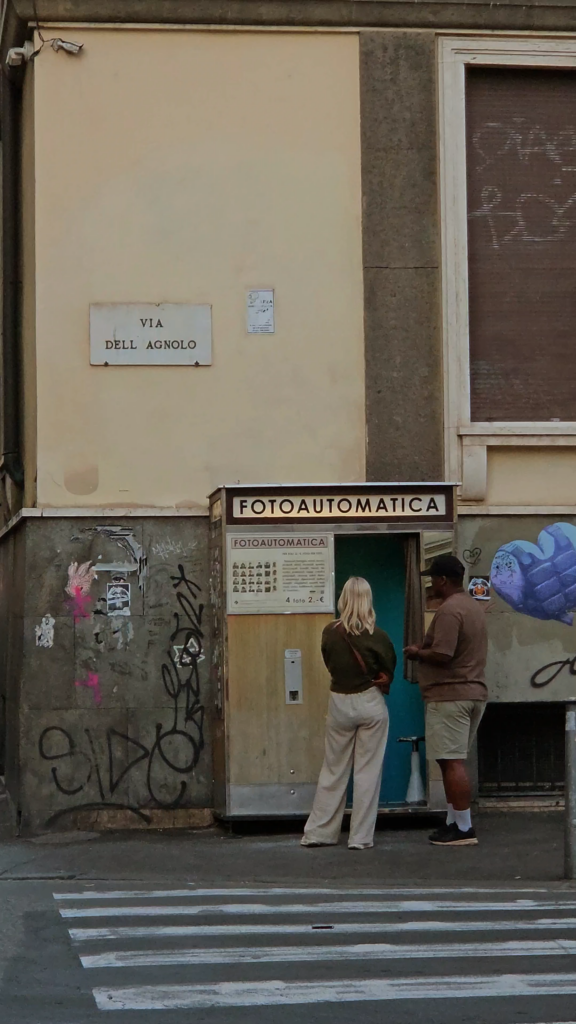
We strolled down toward Via dell'Agnolo to find one of the five vintage Fotoautomatica booths scattered around Florence. These aren't those modern digital booths that apply a "vintage filter." These are the real deal. They are original analog machines from the 1960s and 70s. A local set designer named Matteo Sani saved these machines from the dump, restored their original mechanics, and placed them back on the streets of Florence.
The experience is a time capsule. You put in your coins, the flash blinds you, and then you wait. It takes exactly 4.5 minutes for the machine to develop the strip using real liquid chemicals. The result is a wet, smelling-of-developer black-and-white strip. It’s the ultimate non-digital souvenir.
The Butcher Who Sold Books
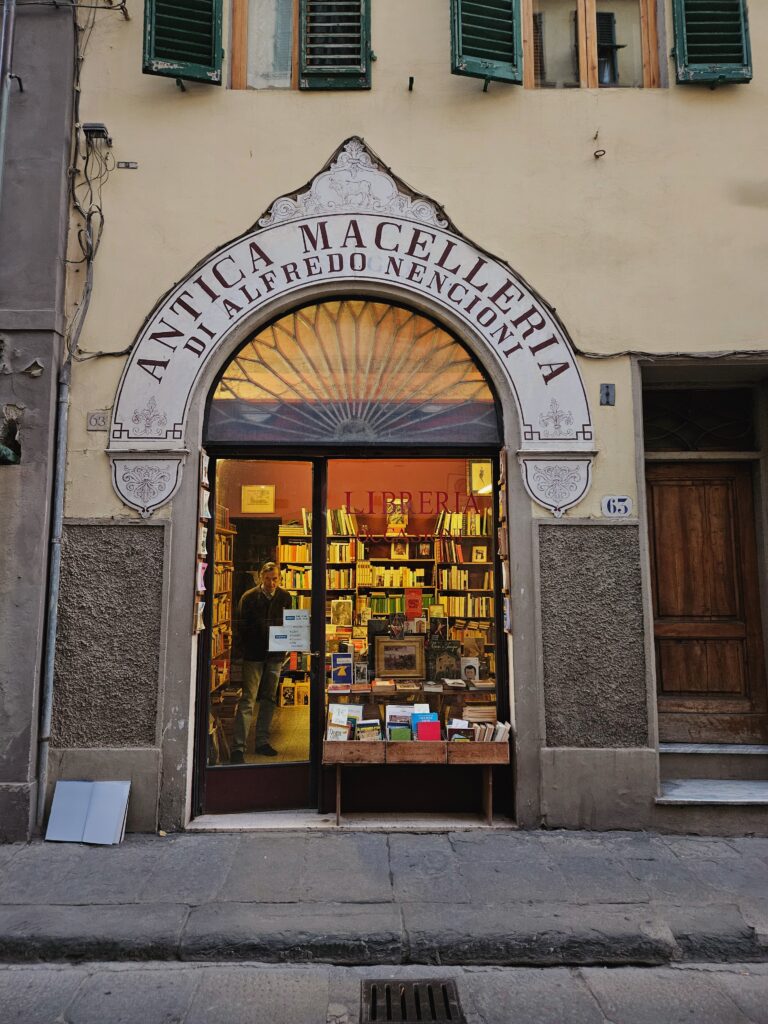
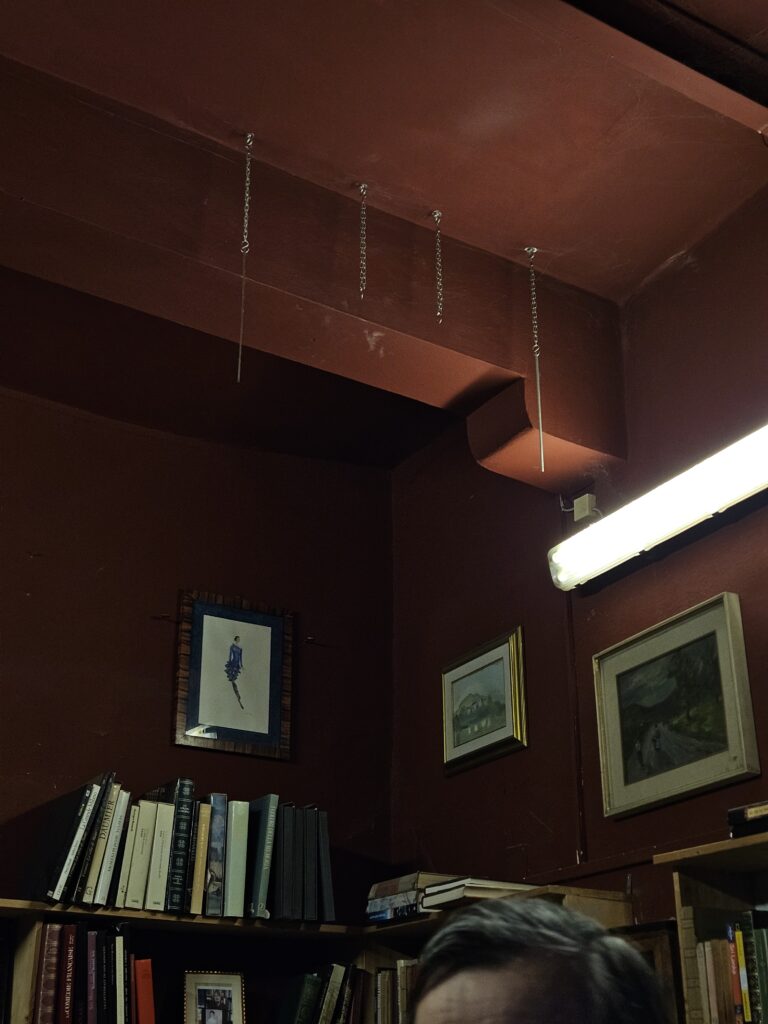
Then, we went hunting on Via Ghibellina. Antica Macelleria di Alfredo is a tiny, magical bookstore disguised as a butcher shop. It is, without a doubt, one of the most unique Florence hidden gems I've ever found while researching my Florence artisan guide. Walking in feels like stumbling into a secret society. From the street, it looks like a butcher shop. Inside, the marble counters are there. The meat hooks are hanging from the ceiling. But there is no meat. Instead, the shelves are stacked with rare books. It's a highlight of Florence off the beaten path that feels like a secret society.
But here’s the thing: This bookstore was just the tip of the iceberg. I spent the next few hours tracking down 12 other rare bookshops, binderies, and artisan weavers hidden in these backstreets. I can't list them all here without turning this article into a novel. If you’re short on time and want the curated version, check out my Maker’s Itinerary: A Guide to 3 Essential Oltrarno Workshops. If you want to dive deeper into the "Maker" side of Florence, I’ve pinned all 140+ locations, including the weavers, the paper marblers, and the vintage dealers, on my Florence off the beaten path Google Map. It’s the full directory that I actually use when I’m here.
If you find the Renaissance weight of the city is starting to feel a bit heavy (it happens to the best of us), I’ve curated a separate 'hush-hush' guide to my 4 favorite bookstores in Florence for introverts. It’s the ultimate list for when you need to swap the tour groups for a glass of wine and a quiet corner, including a 1920s cinema that will make you feel like you’ve stepped into a film set.
Dinner: The Institution (Trattoria La Casalinga)
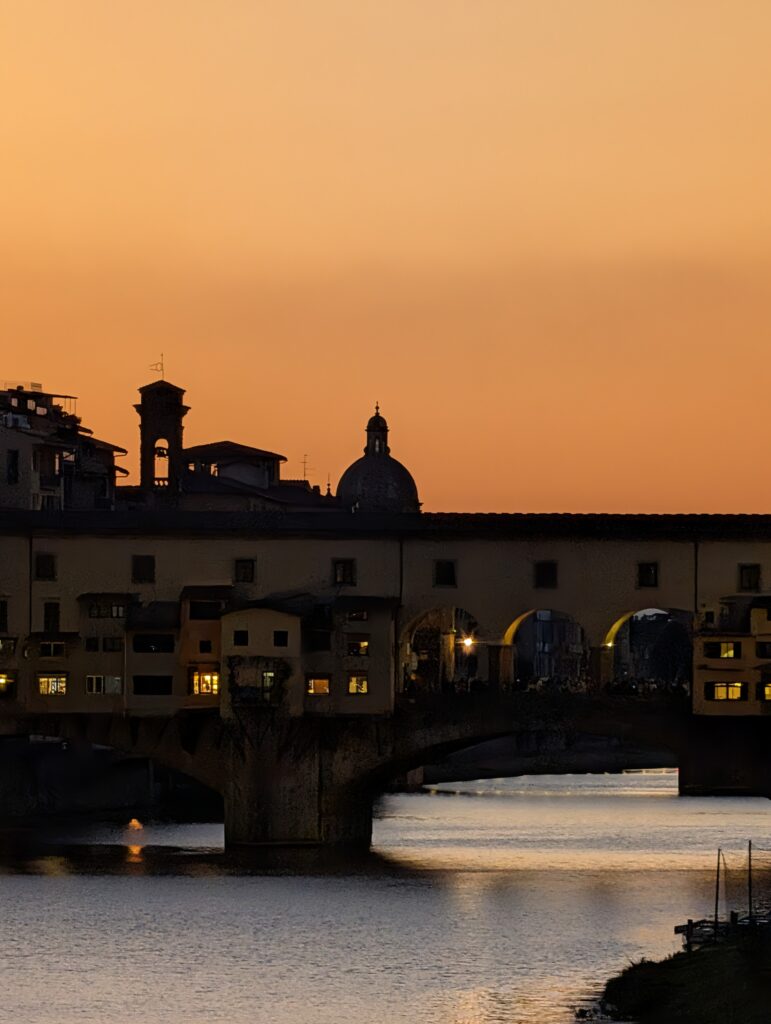
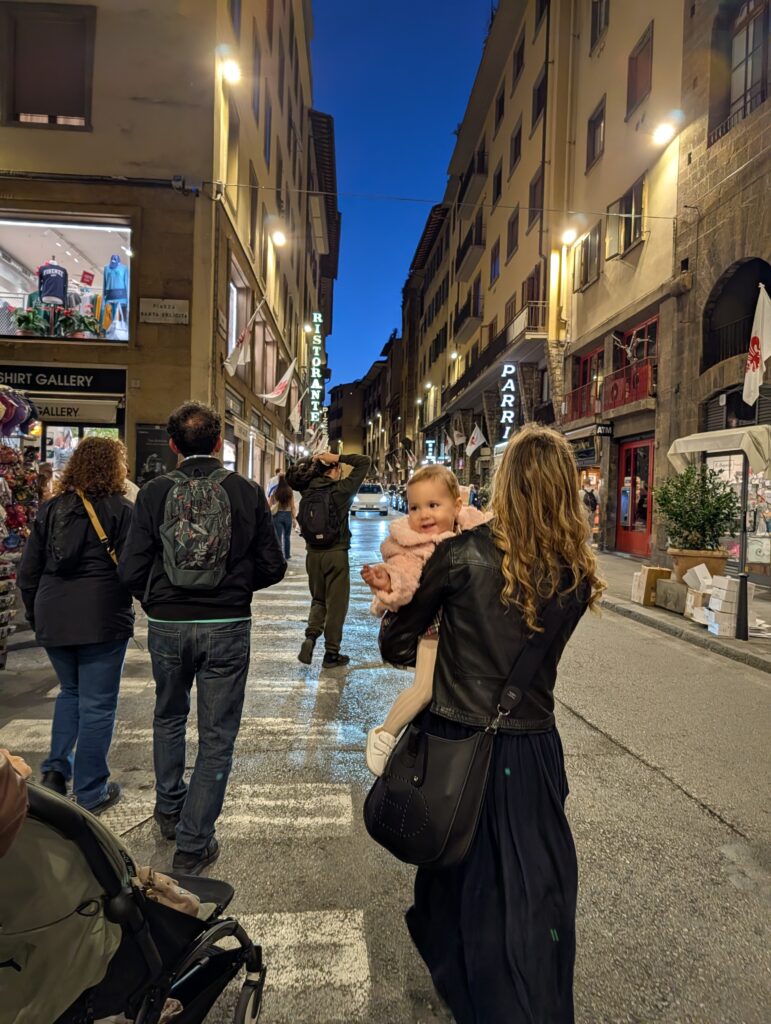
To get to a dinner that is truly off the beaten path in Florence, we crossed the Arno via the Ponte alle Grazie. It was one of those moments that feels scripted by a movie director: the sun was setting, casting a heavy golden glow over the Ponte Vecchio in the distance. Below us, a single rower was cutting through the water, the rhythmic dip of the oars creating the only ripples in the river. It was the calm before the storm. Because where we were headed, Trattoria La Casalinga, is anything but calm.
To understand why this place matters, you have to know its history. It was opened in 1963 by Nello Bartarelli and Oliviero Carrai, two farmers who left the Chianti countryside to move to the big city. They didn't want to open a fancy restaurant. They wanted to feed the working class the same food they ate back on the farm. That spirit is still alive today.
The name La Casalinga literally means "The Housewife," and that is exactly the vibe. It is brightly lit, noisy, and chaotic in the best way possible. The waiters are professionals who move with a speed that defies physics. You will see a lawyer in a suit eating next to a mechanic in overalls, both devouring the same plate of stew.
What to Order: This is not the place for experimentation. It is the place for classics.
- Homemade Ravioli (What I Ordered): Simple, fresh, and clearly made by hand in the kitchen that morning.
- Ribollita: Theirs is the benchmark. Thick, hearty, and swimming in olive oil.
- Peposo: A beef stew cooked for hours with black pepper and red wine.
- Crostini di Fegatini: Chicken liver pâté on toast. If you think you don't like liver, try this and get back to me.
- The Baked Apple (What I Ordered): Do not skip dessert. We ordered the baked apple with gelato, and it was life-changing. Warm, soft fruit melting against the cold gelato.
~ Day 2: Hidden Carvings, Leather & Secret Wine ~
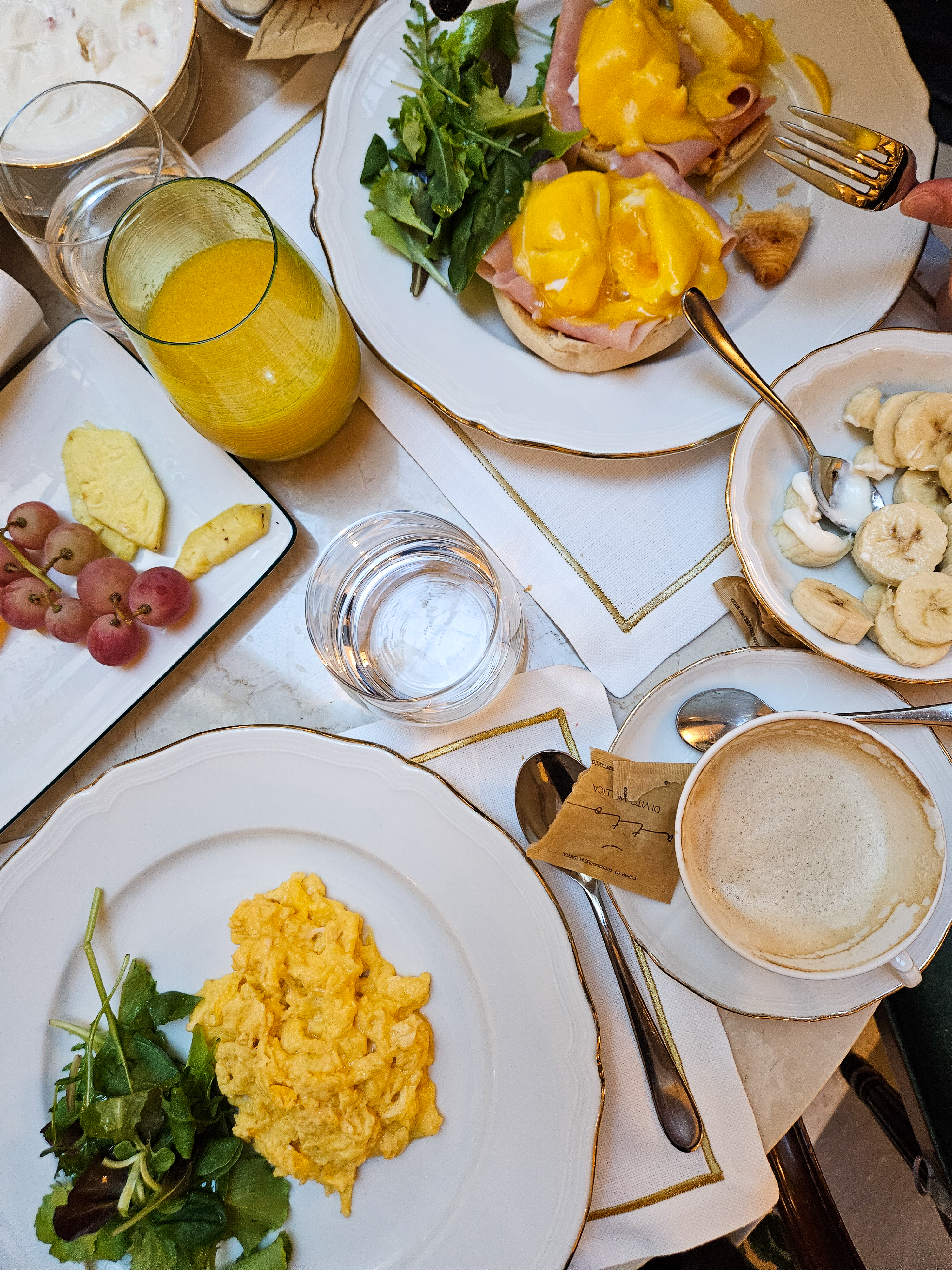
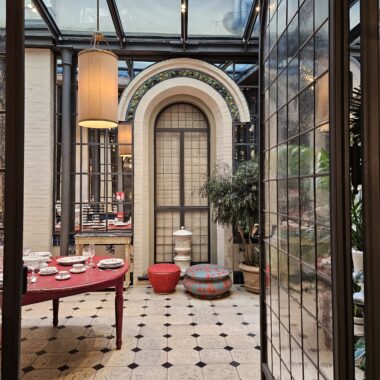
We started the morning with breakfast at Salotto Portinari (inside our hotel). Even if you aren't staying here, the food and setting is worth the detour.
The Hidden Michelangelo
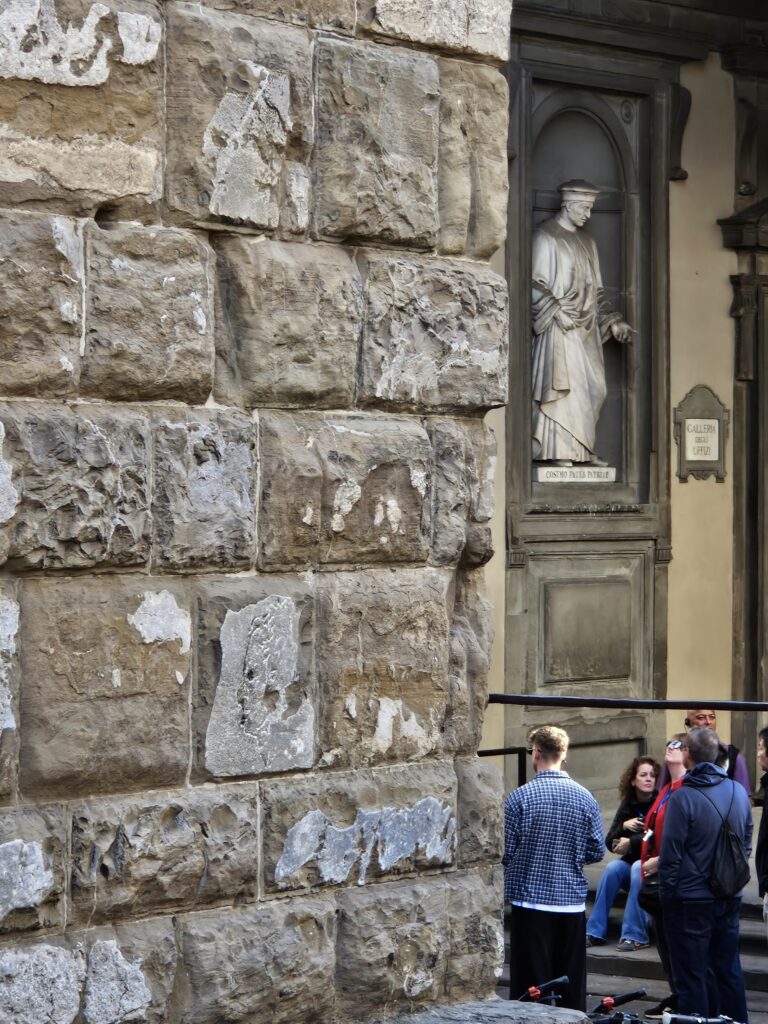
As we walked toward Piazza della Signoria, I pointed out something most people walk right past. Carved into the stone wall of Palazzo Vecchio, to the right of the entrance, is a simple profile of a man. It’s known as L'Importuno ("The Nuisance"), and the legend is hilarious. The story goes that Michelangelo was constantly stopped in the piazza by a man who would bore him to death with endless chatter. One day, unable to escape the conversation, Michelangelo leaned against the wall and with his hands behind his back carved the man's profile into the stone just to pass the time. It’s a tiny piece of graffiti by a master that doesn't require a ticket.
The King's Hot Chocolate at Rivoire
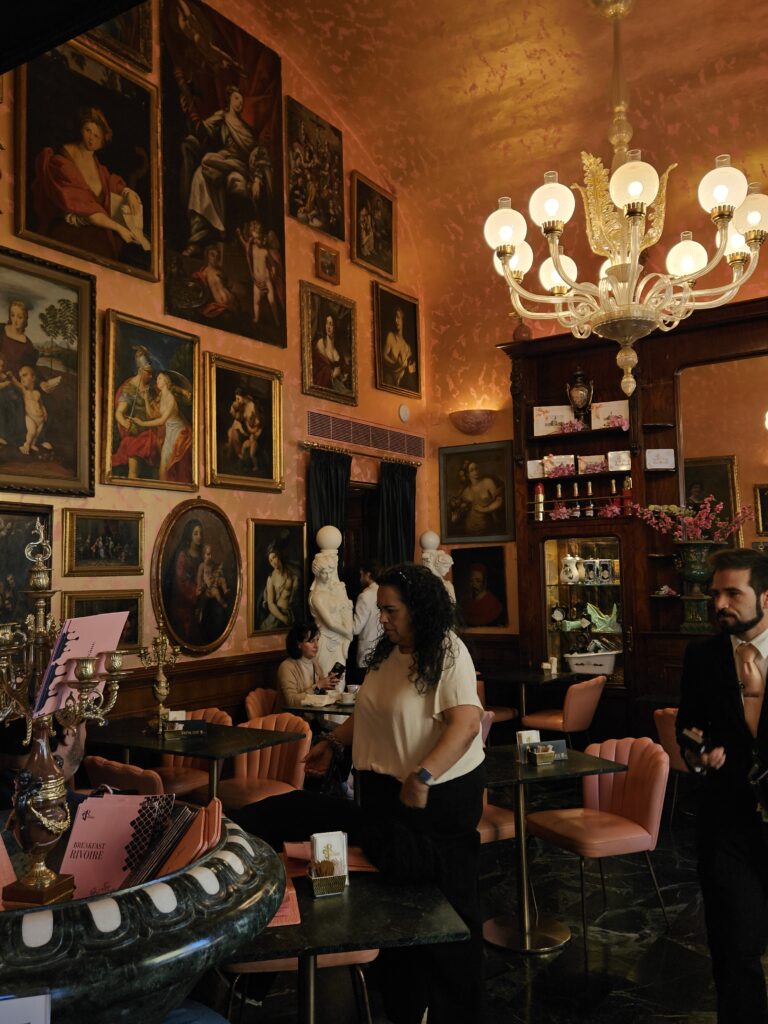
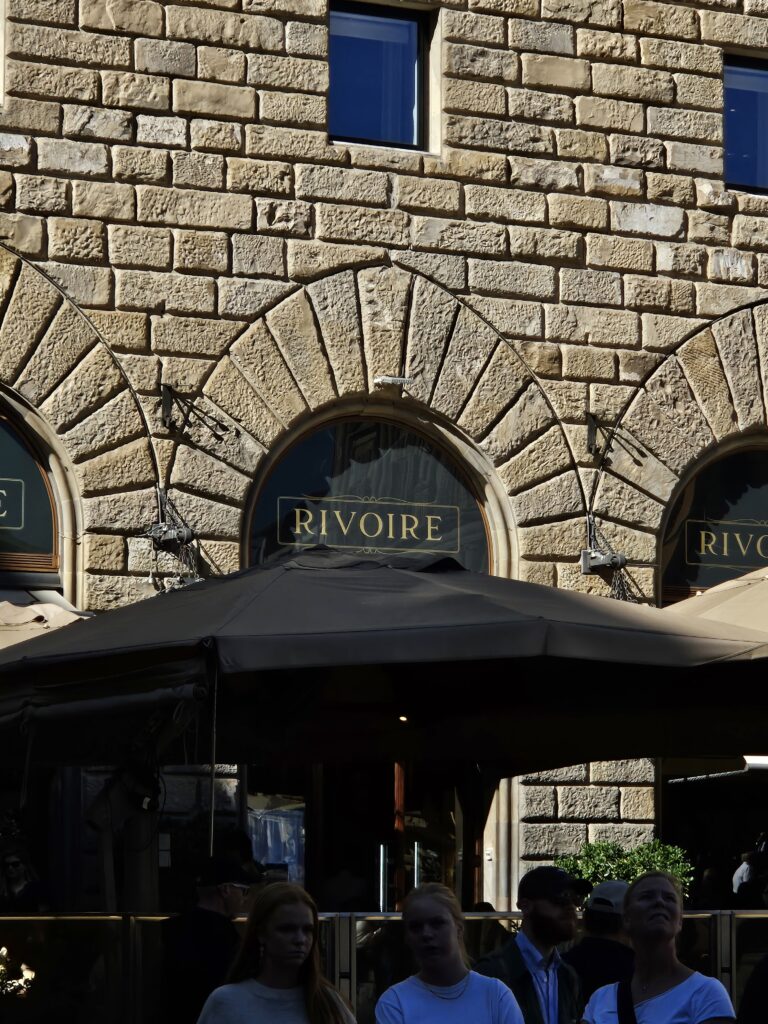
Right next door is Rivoire. Yes, it is an institution. Yes, it is right on the main tourist piazza. But go here for the history. It was founded in 1872 by Enrico Rivoire, who was the official chocolatier to the Royal House of Savoy (the Kings of Italy). When Florence was briefly the capital of Italy, the King wanted his chocolate, so Rivoire followed the court here. Do not sit at the tables outside unless you want to pay "tourist prices." Do what the locals do and walk inside to the marble counter, stand at the bar, and order your drink. The Cioccolata in Tazza (Hot Chocolate) is the go-to here. Growing up between the best cafes in Milan and Lake Maggiore, I’ve had my share of world-class coffee, but this is liquid ganache in a cup.
The Harry Potter Apothecary
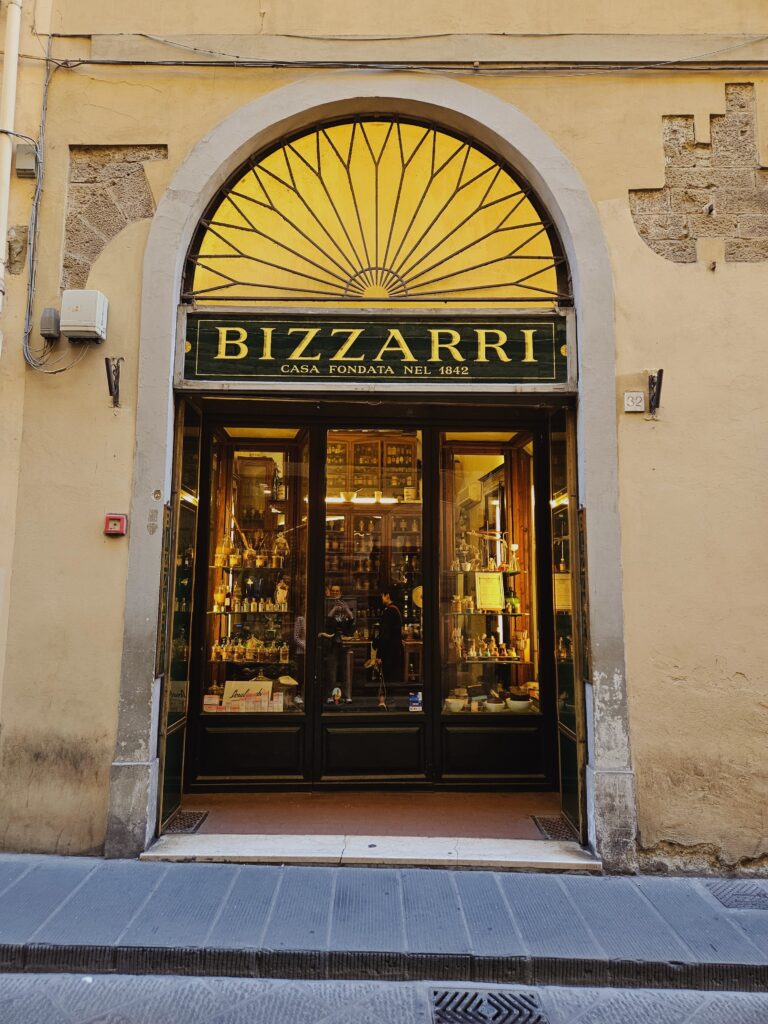
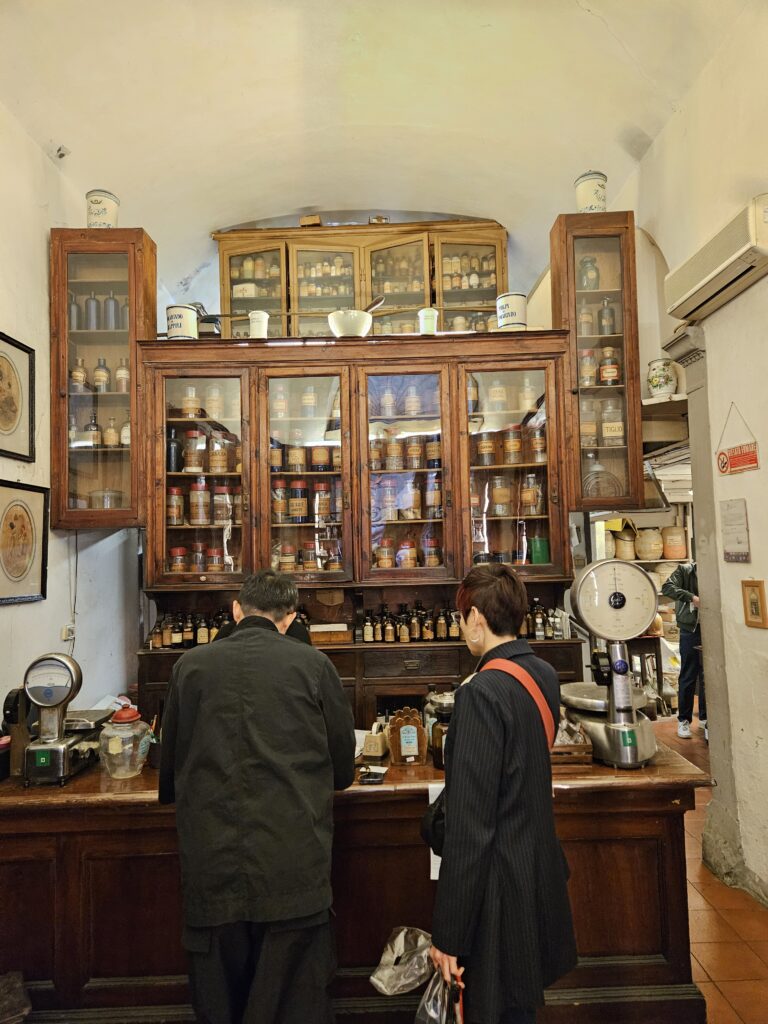
Florence off the beaten path isn't just about where you go, but what you find behind the doors of places like Bizzarri. This isn't really a shop, it’s a "Cabinet of Curiosities." Founded in 1842 by Alessandro Bizzarri, this place hasn't changed in nearly two centuries. It feels dusty, scientific, and utterly magical, filled with wooden shelves holding jars of spices, chemicals, and tinctures that look like they could turn lead into gold. Originally, it was a supplier for everything from photography chemicals to restoration solvents (and yes, even some poisons). Today, stepping inside feels like walking onto a movie set. The jars are handwritten and the air smells of clove and mystery.
The Leather School: A Museum Experience
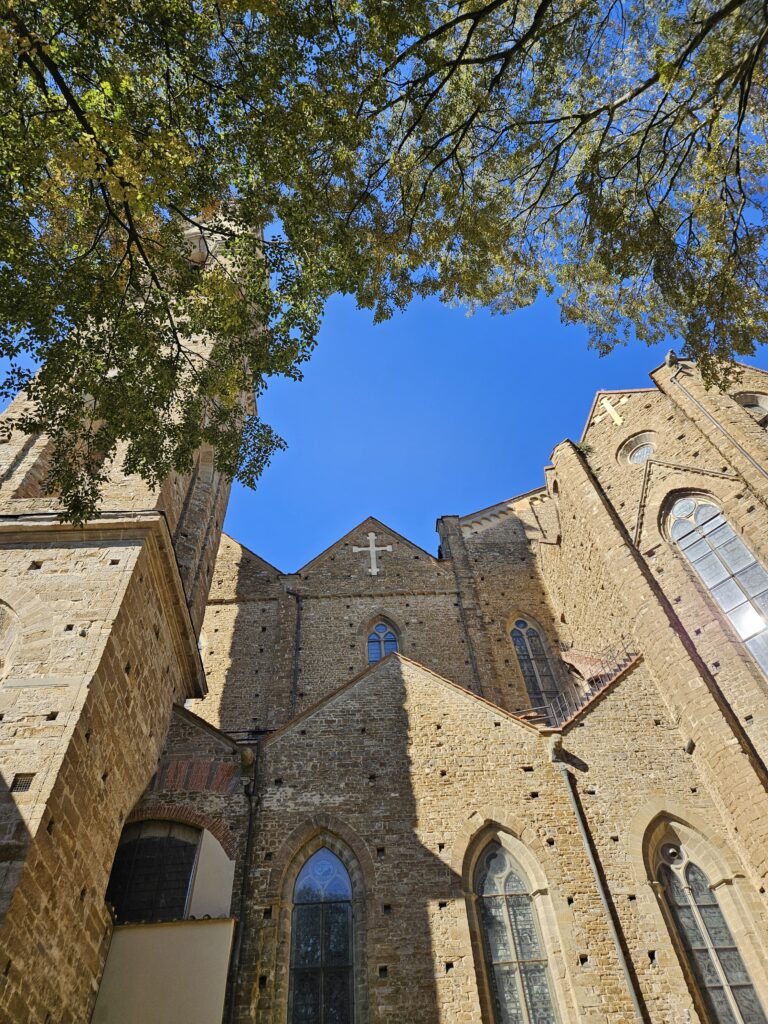
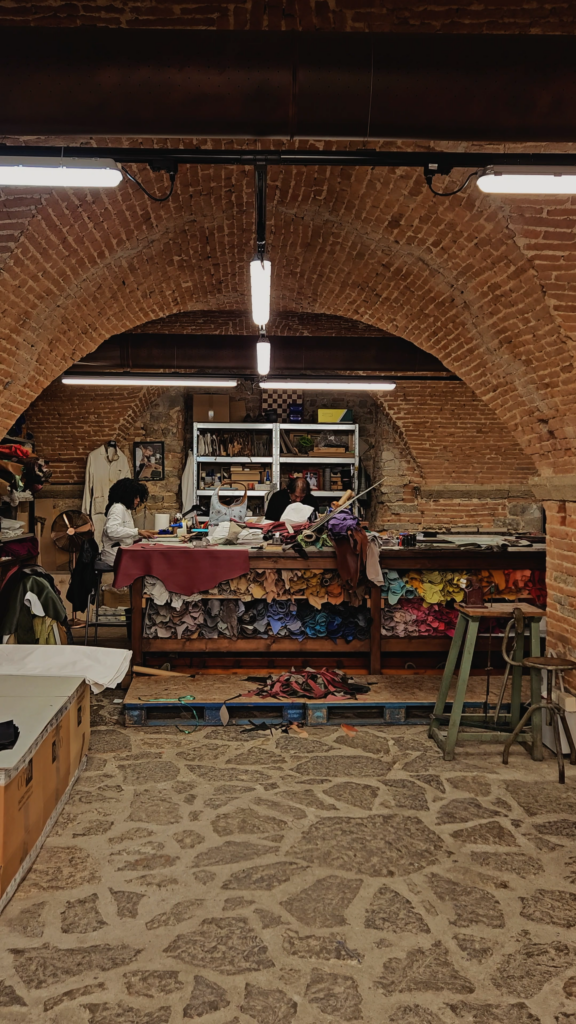
Next, we headed to Scuola del Cuoio (The Leather School) behind Santa Croce. Let me be clear about this place: It is absolutely worth the visit. It is historic, it is beautiful, and watching the students cut and sew leather by hand in the old monastery corridors is a museum-quality experience.
While the history is beautiful, I find the leather here a bit stiff for my taste. For that buttery hand-feel I prefer for major investments (similar to what I hunt for during my Puglia Itinerary: A 7-Day Road Trip), I use the independent ateliers I’ve pinned on my map.
A Walk Through the Flea Market
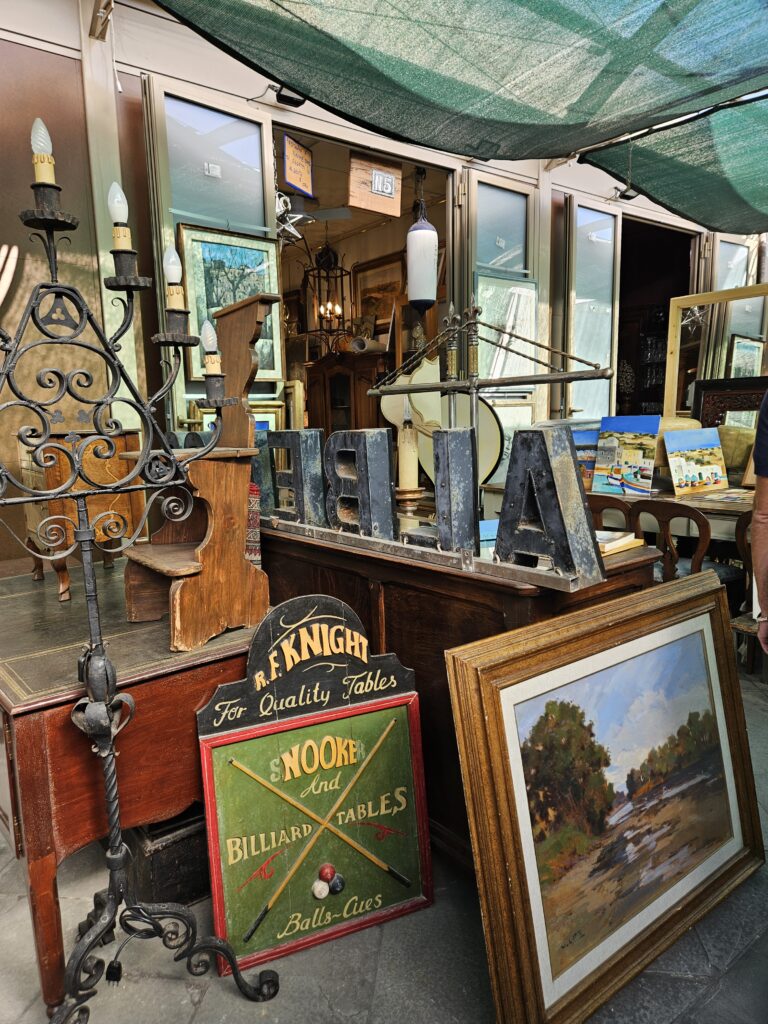
Before lunch, we took a stroll through the Mercato delle Pulci (The Flea Market). For decades, this market was a chaotic, charming mess of open-air stalls in Piazza dei Ciompi. It was legendary. But in 2019, the city moved it to a new, "sanitized" location in Piazza Pietro Annigoni (right near Sant'Ambrogio). The new structure is a modern glass-and-steel pavilion that, honestly, feels a bit sterile compared to its gritty predecessor.
I’ll be real with you: I was underwhelmed. I had heard stories of people finding Renaissance-era keys and priceless vinyls here. When I went, admittedly around lunchtime, it felt a bit sleepy. Half the stalls were closed for lunch and the "treasures" felt more like stuff I would find in my nonna’s attic. However, if you are a hunter, there are still gems to be found if you dig, specifically: vintage Italian postcards (great bookmarks), dusty old coins, mid-century lamps, and sometimes, if you are lucky, vintage straw bags.
My Tip
Go in the morning (around 10:00 AM). Do not go at lunchtime like I did, or you will mostly be looking at closed shutters. Even if you don't buy anything, it’s worth a quick walk through on your way to lunch.
The "Locals Only" Lunch Spot
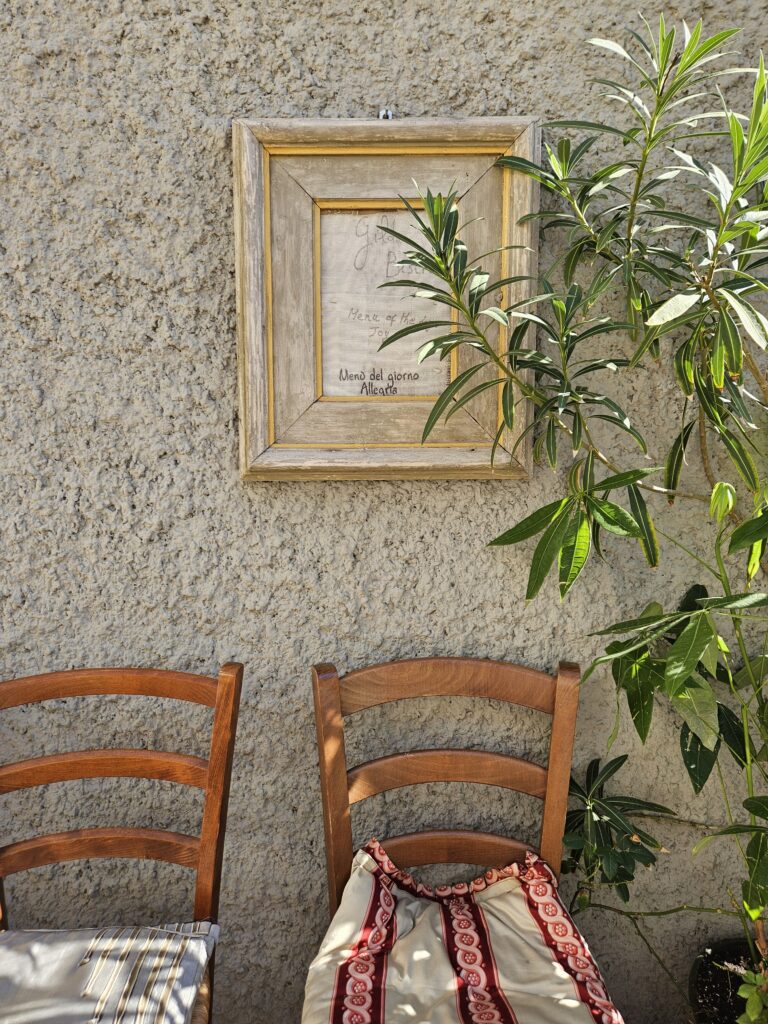
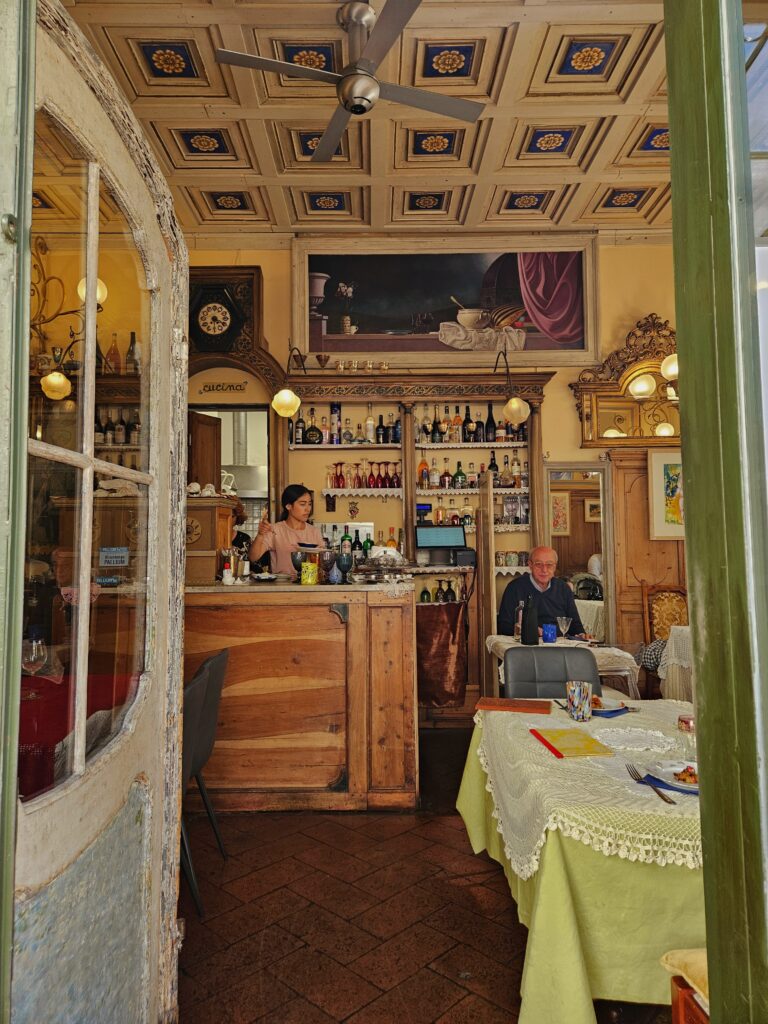
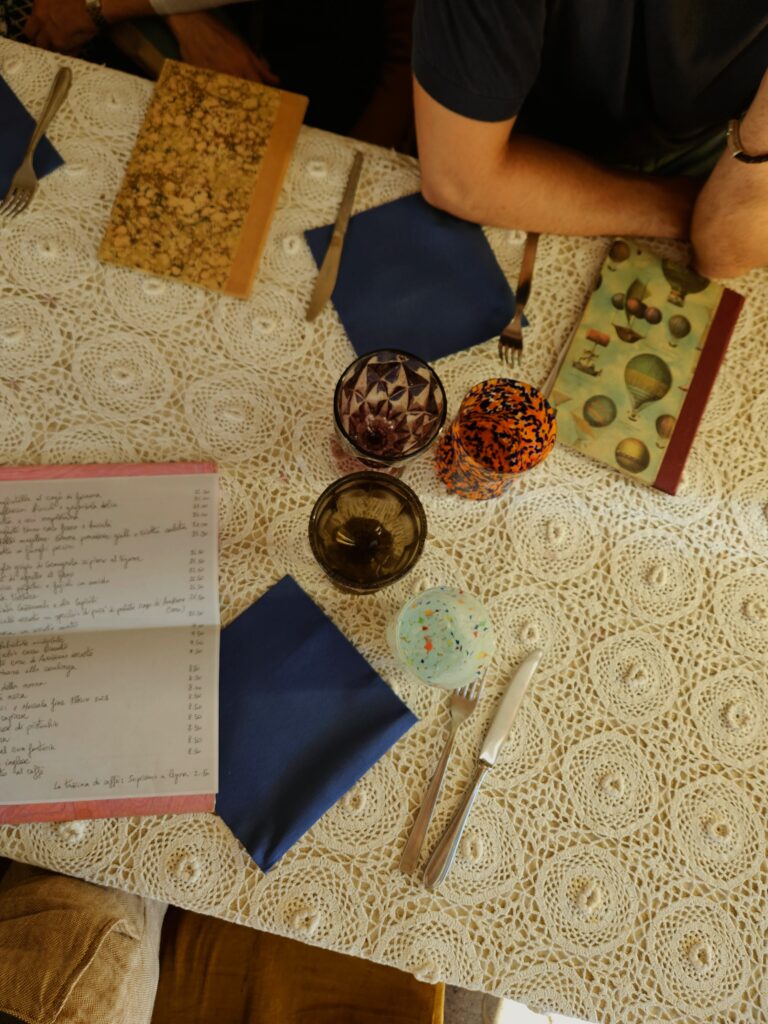
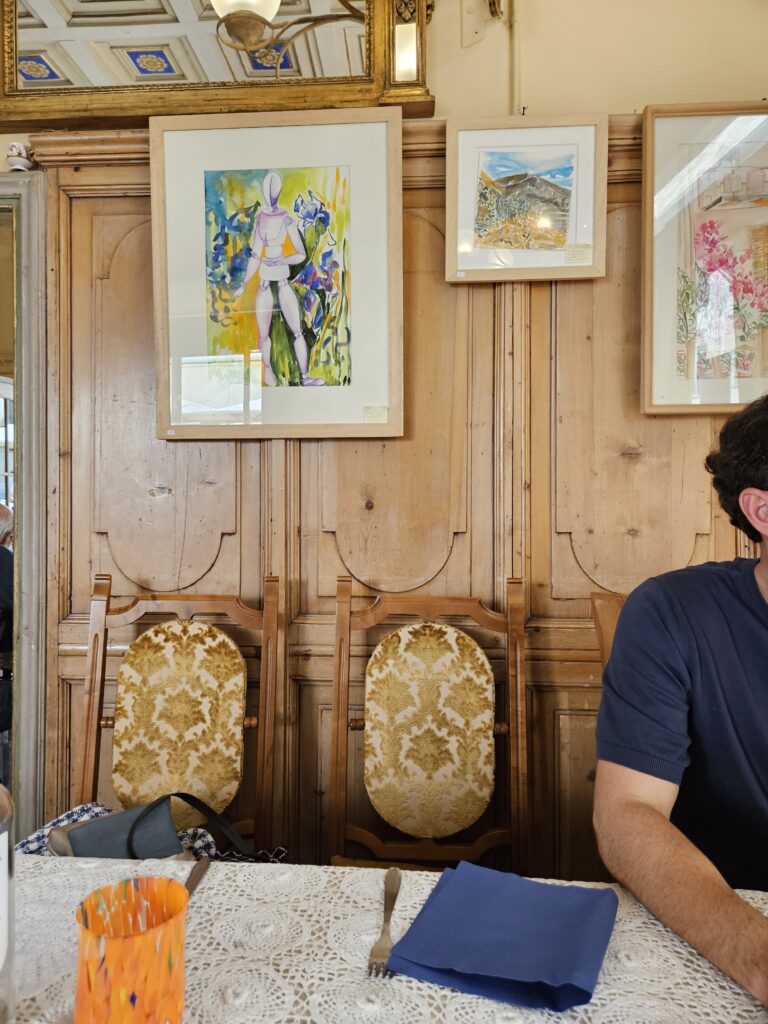
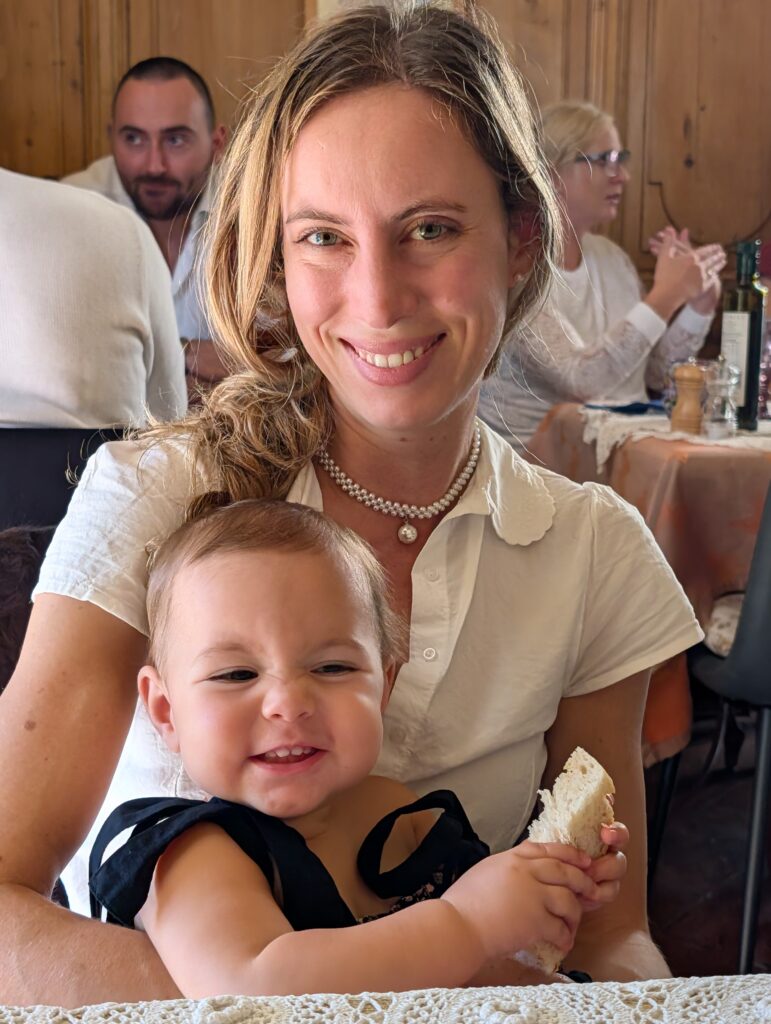
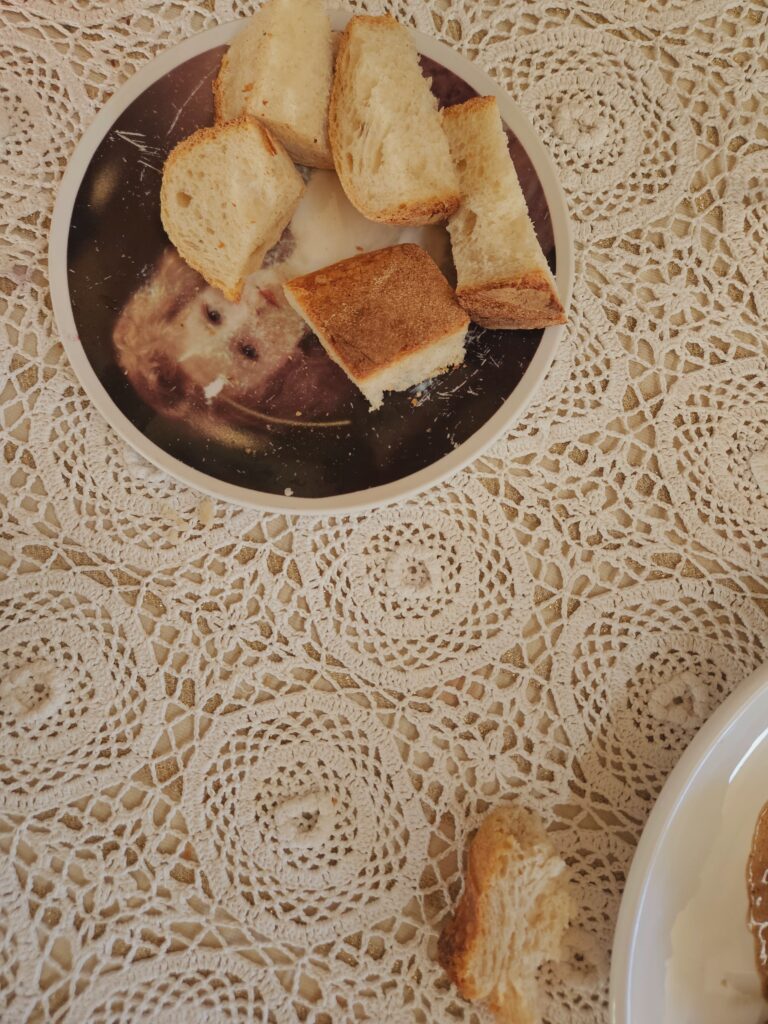
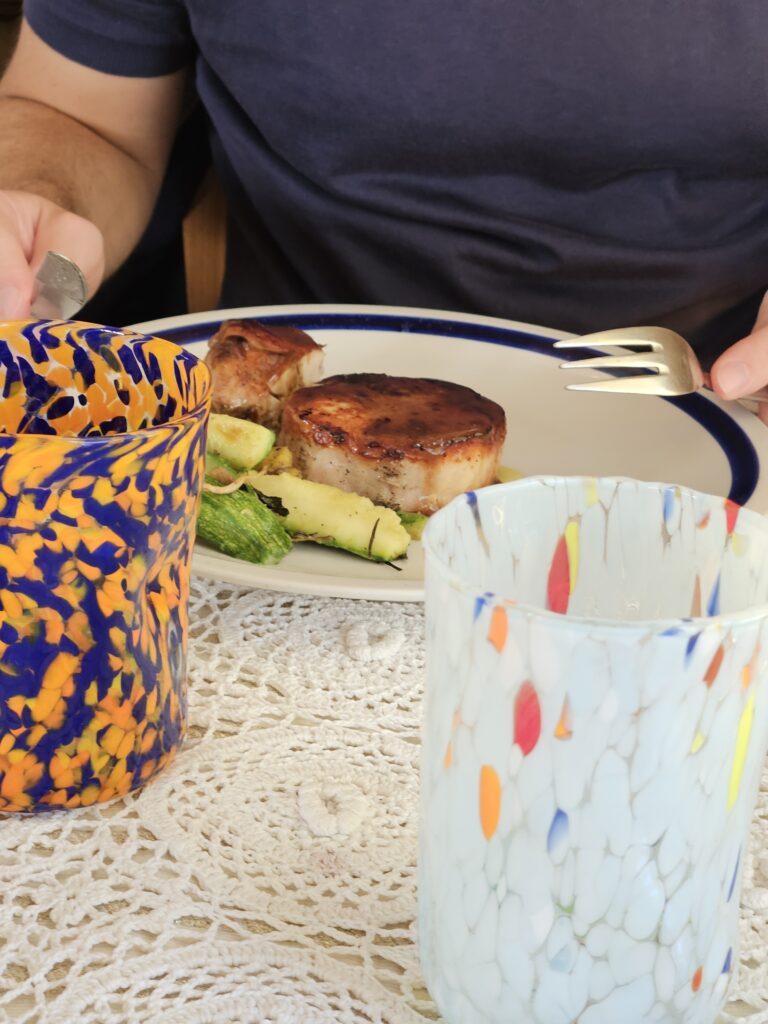
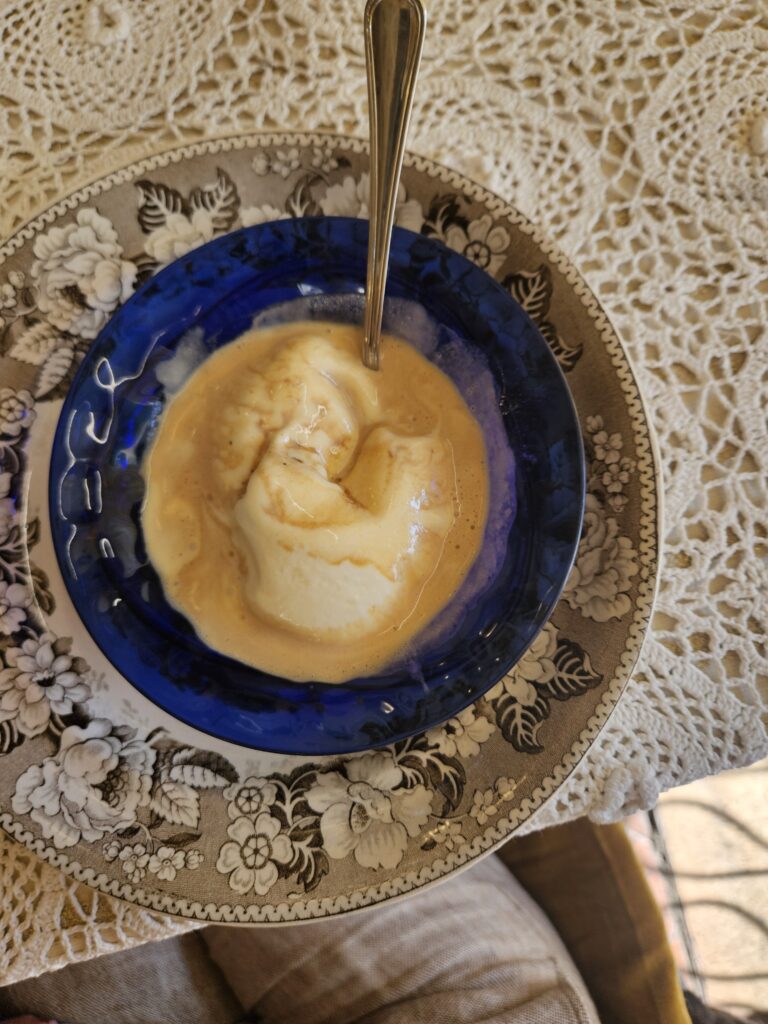
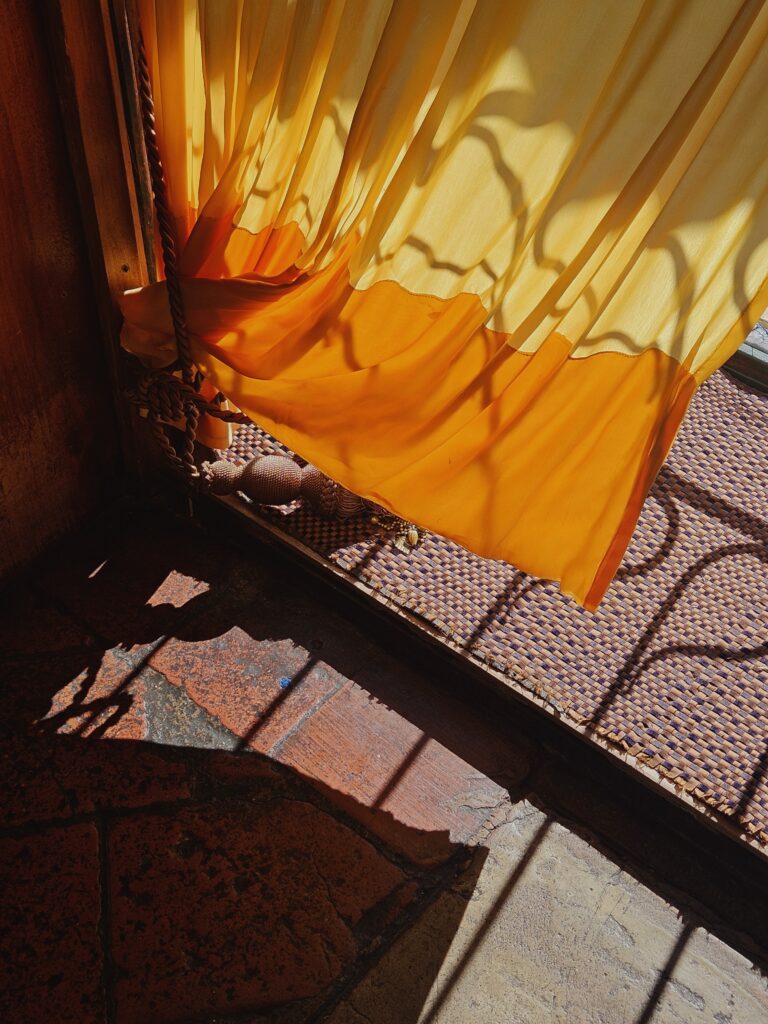
For lunch, we headed into the heart of Sant'Ambrogio to a spot that I fell in love with immediately. The menu was handwritten and the decor was a mix of vintage lamps, odd paintings and super funny tableware. But the best part of this stroller-friendly dining in Florence was the welcome. The owners were incredibly sweet, stopping by our table constantly to entertain Sibby. At the end of the meal, they even brought her a little mini-affogato on the house. It looked so good that Patrick and I immediately ordered our own.
The Food: Everything here is 0km, sourced from nearby farms or the market right outside.
- I ordered: Carré di agnello al forno (Roast rack of lamb): tender, flavorful, and cooked perfectly.
- Patrick ordered: Coniglio grigio di Carmagnola ripieno di tegame (Stuffed Grey Rabbit of Carmagnola). This is a rare, Slow Food presidium breed, and finding it on a menu is a sign that the kitchen knows exactly what they are doing.
I’m going to be selfish and gatekeep the name of this one. It’s small, it’s special, and I want to keep it that way for the locals (and you). I’ve pinned the exact location of this bistro, along with 30+ other restaurant recommendations, on my curated Florence off the beaten path Map.
Coffee at a Florentine Institution
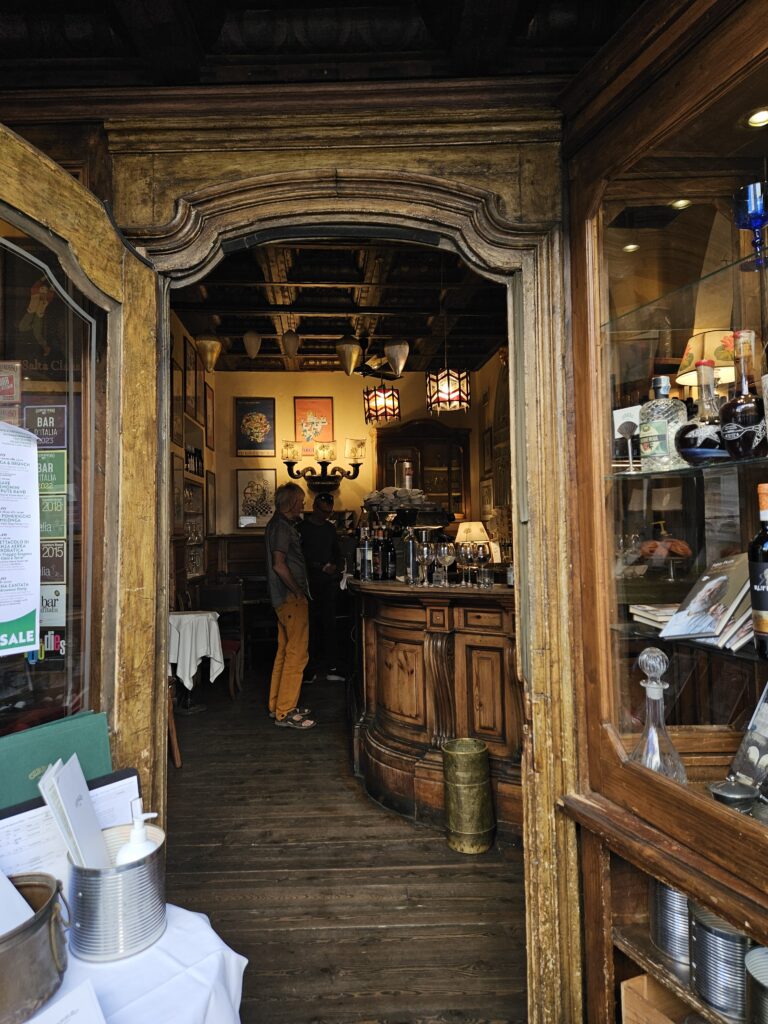
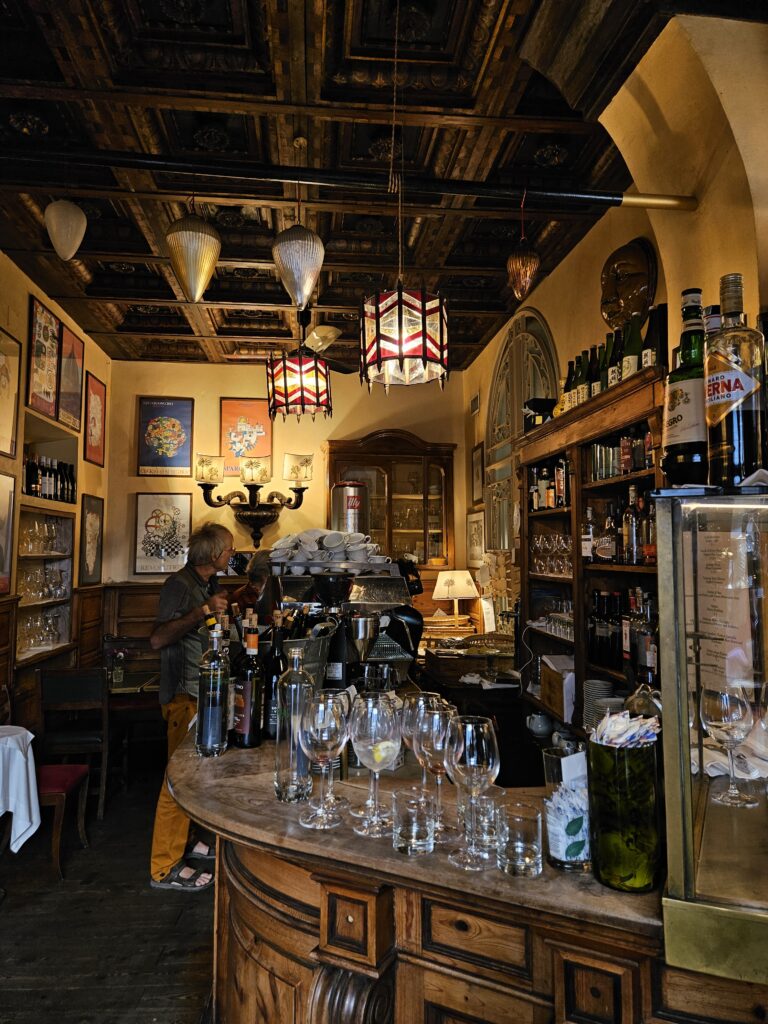
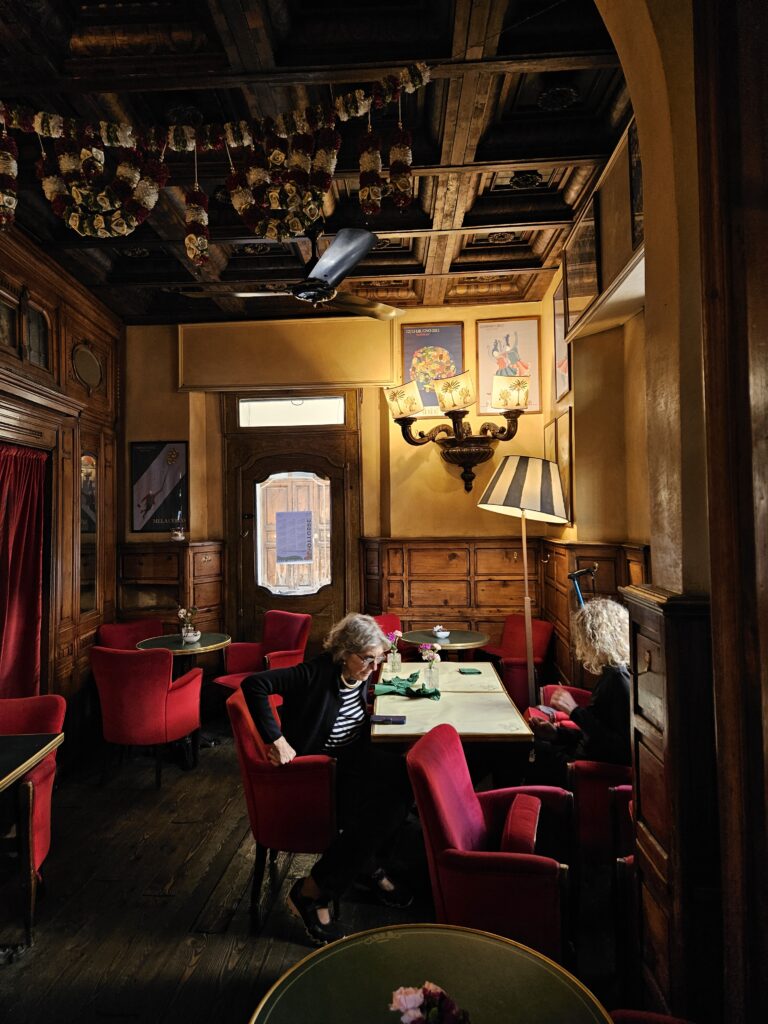
After lunch, we waddled a few steps over to Cibrèo Caffè. You cannot talk about Sant'Ambrogio without talking about the "Cibrèo Empire." Founded by the legendary chef Fabio Picchi, this corner of Florence is dominated by his establishments: the Trattoria, the Ristorante, and the Caffè.
We stopped into the Caffè for a digestivo, and it felt like walking onto a stage set. The interior is all wood paneling, brass details, and plush red velvet seats that make you feel like you’re in a historic theater. It is beautiful, dramatic, and intensely Florentine. It makes you feel like you are part of the city’s intellectual history while sipping an espresso.
The Secret Wine Window (Email Exclusive)
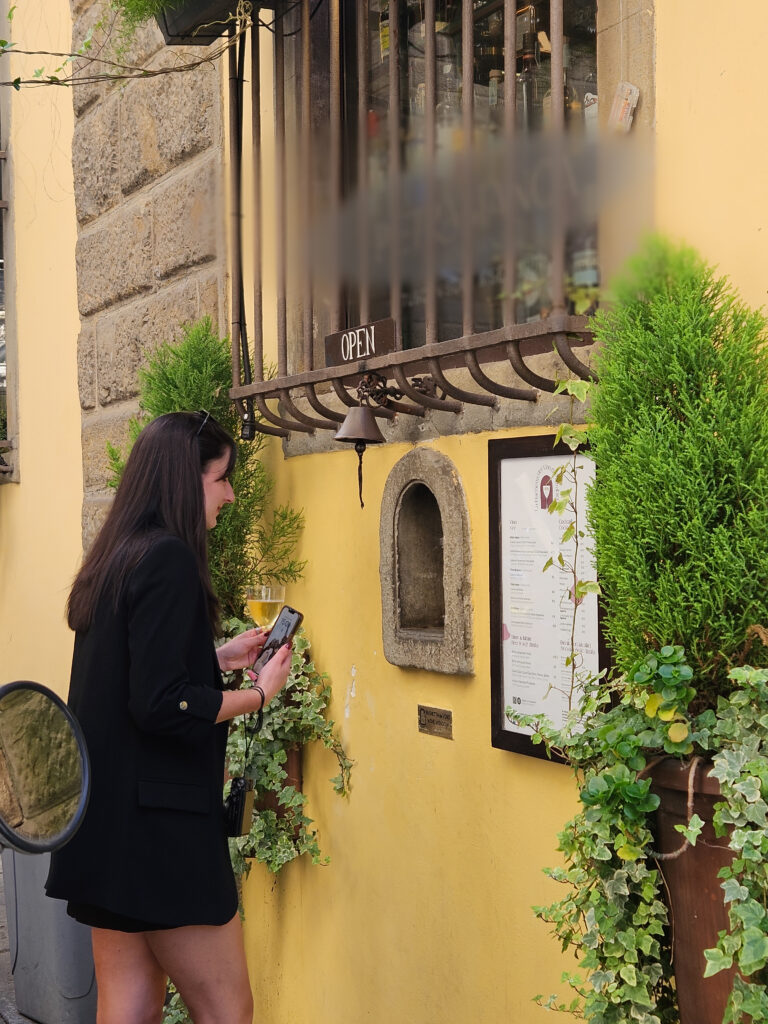
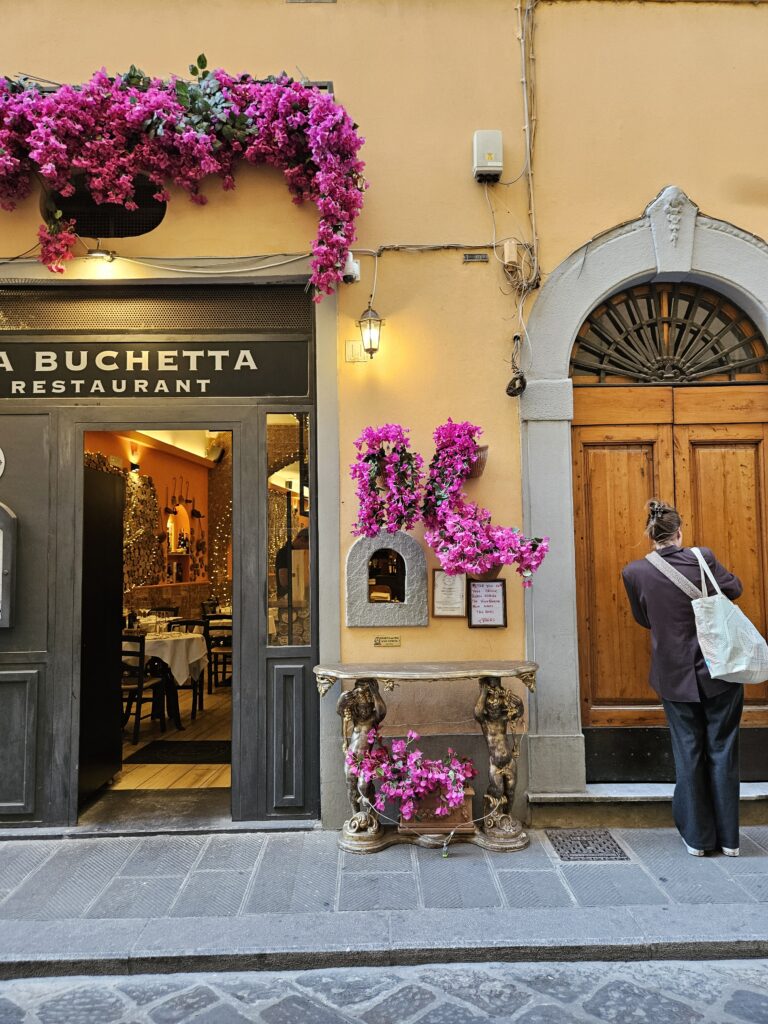
As part of my mission to show you Florence off the beaten path, I tracked down the city's historic Buchette del Vino (Wine Windows). Currently, the most famous one on TikTok has a 45-minute line of people setting up tripods. We did not go there. I did write a deep-dive guide on the history of this tradition, the "red flags" to avoid (please don't drink from plastic cups), and my review of a few Florence wine window spots. Read the Full Guide: Drinking Through Walls – The History & Map of Florence’s Wine Windows
I found a tiny, quiet buchetta nearby where there was zero line. The owner opened the little wooden door, chatted with us, handed us two glasses of red, and we drank them in peace. Honestly? I’m terrified to put the name on the open internet. I’ve seen what happens when the masses descend on a small local spot, and I want to protect this one. So, let's make a trade. Drop your email below, and I’ll send you the name and location of this specific wine window, plus the secret of the "€2 Private River 'Club'" on the Arno and an iconic must-visit hat store, directly to your inbox.
The Shops I'm Keeping to Myself
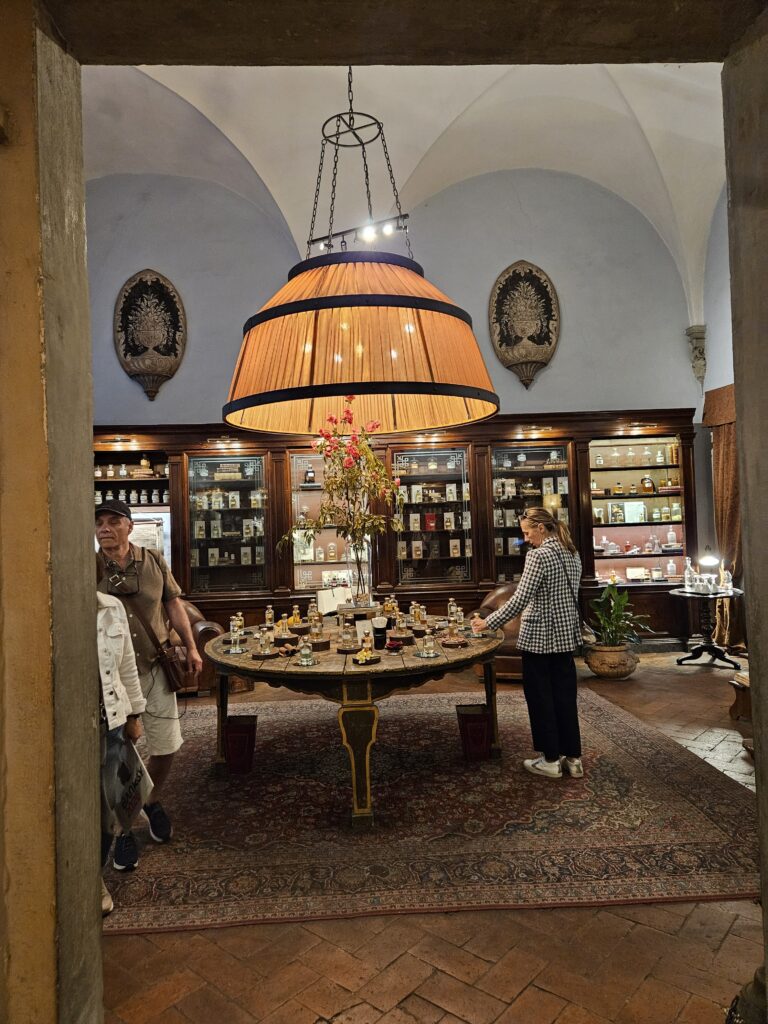
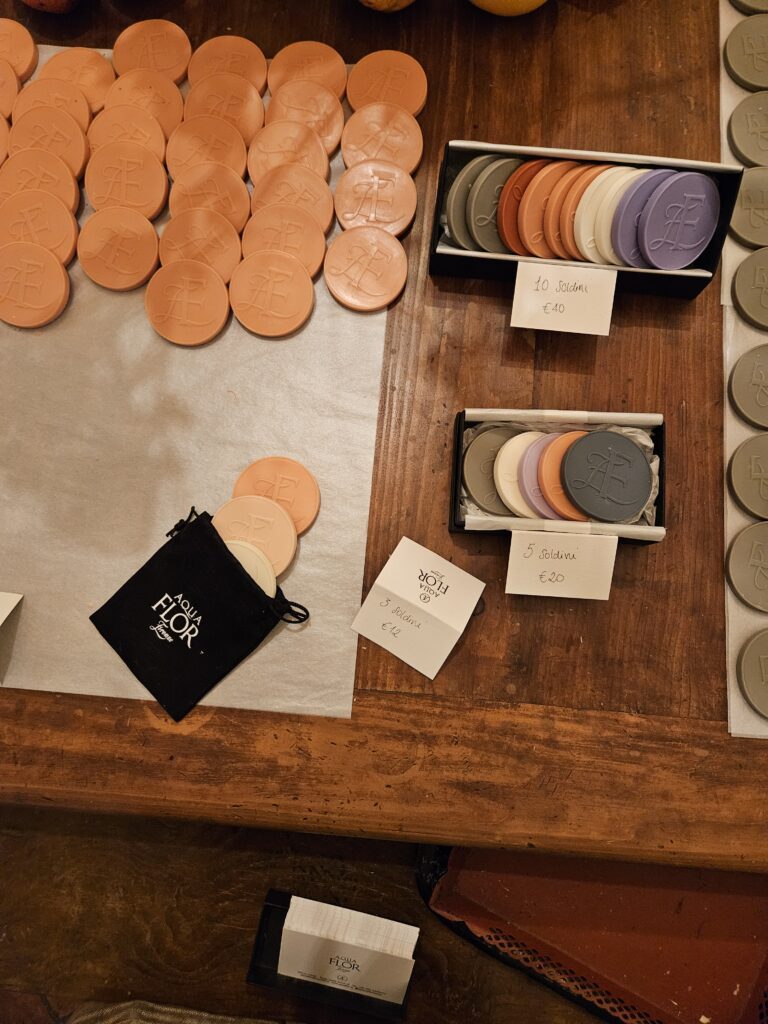
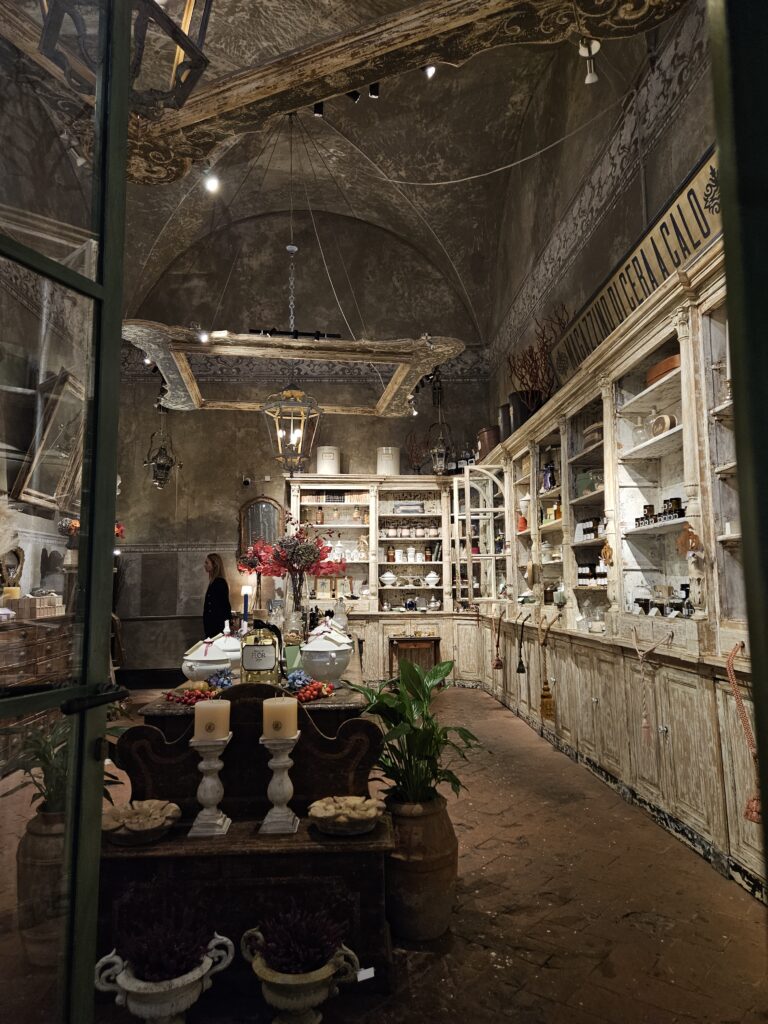
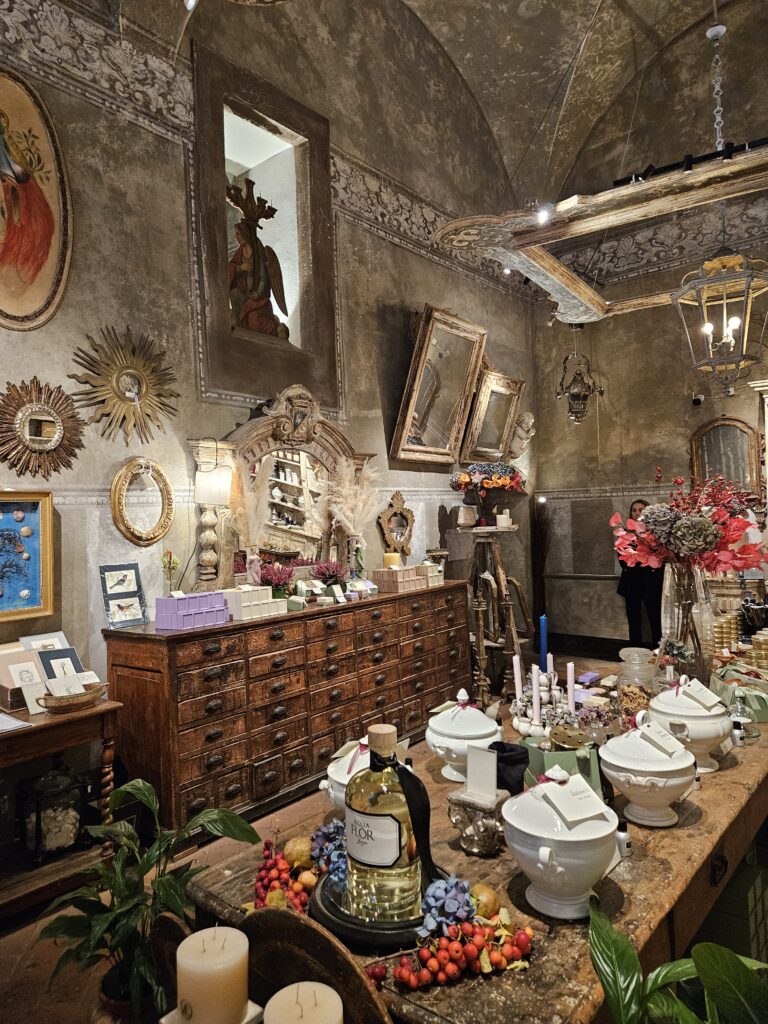
Fueled by Chianti, we went hunting for two very specific artisan spots that I’m going to gatekeep here (sorry, not sorry).
- The Secret Perfumery: Most people go to the big famous pharmacy (we’ll get there tomorrow), but I found a perfume atelier hidden inside a Renaissance palazzo that feels like a private residence. It is filled with glass jars of essences and smells like heaven.
- The Paper Marbler: We also visited a workshop that takes paper marbling seriously, not the cheap souvenir stuff, but true craftsmanship.
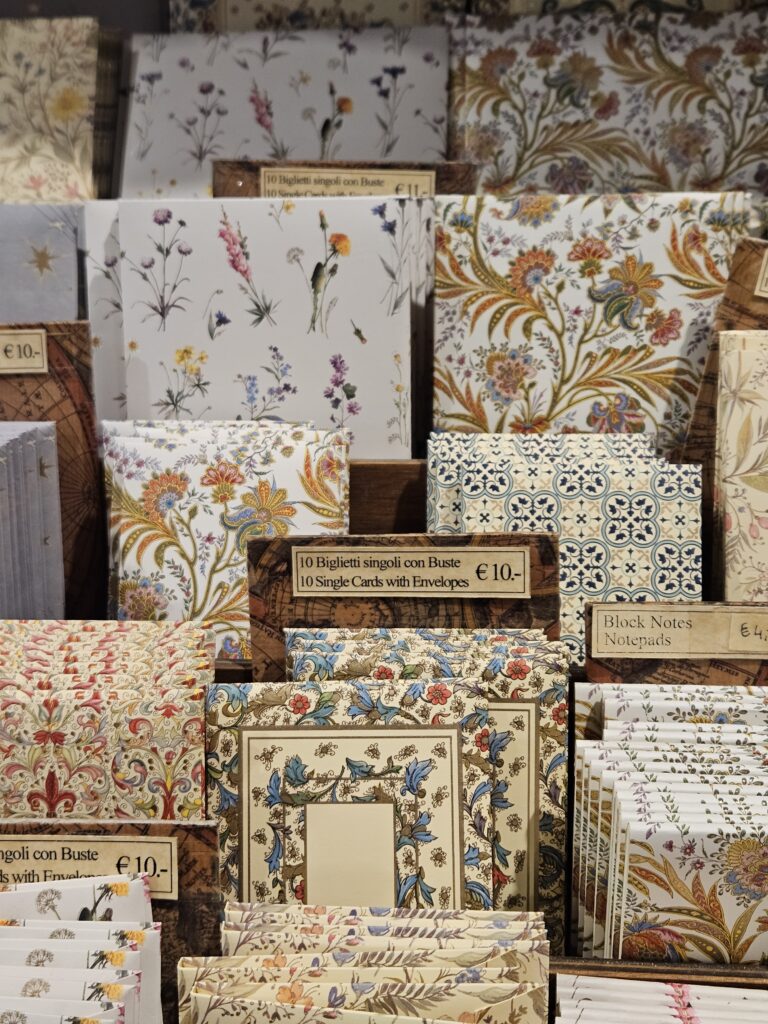
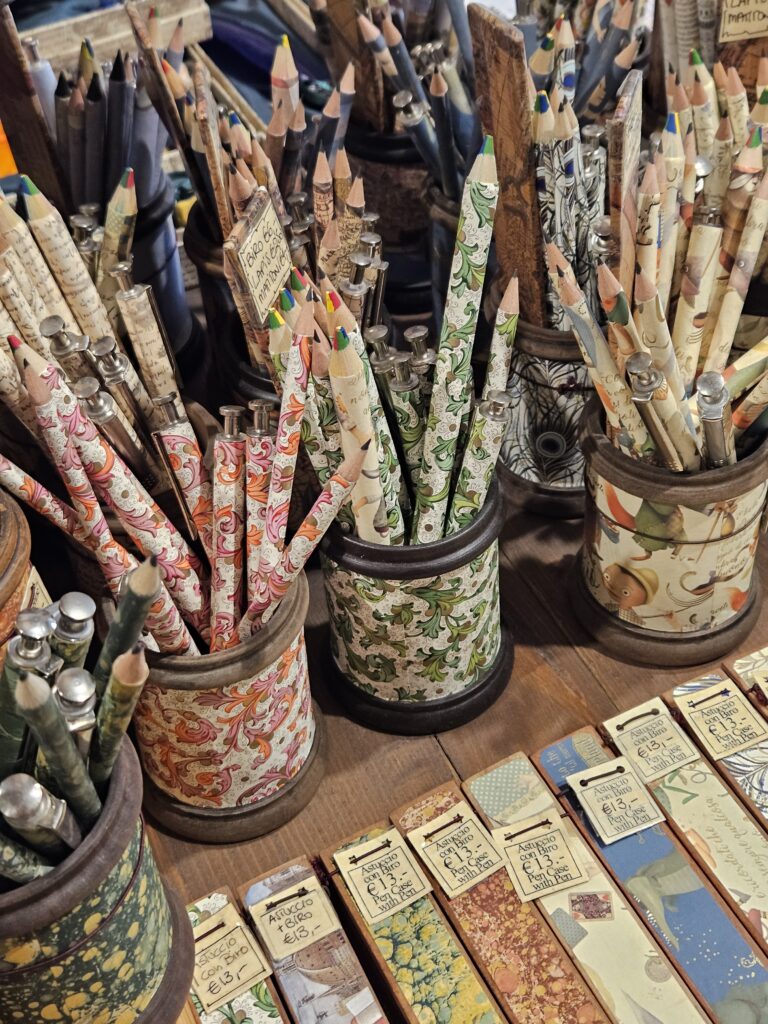
I’m not dropping the name of this atelier here, I’d like to be able to visit next year without a line out the door. However, the exact pin (plus Signum, which is great for vintage postcards) and my personal order recommendations are live on the Svadore Florence off the beaten path Map.
Svadore's Choice: Which Florence are you visiting?
The Iconic Path
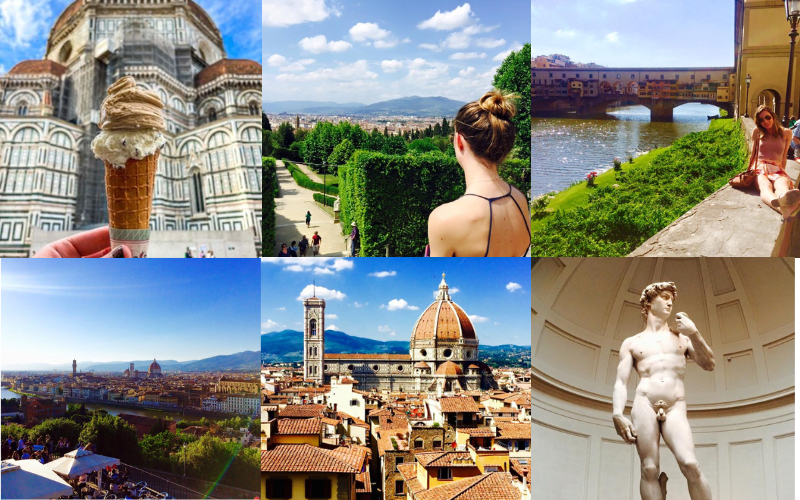
High-energy, Duomo climbs, and David’s glutes. Best for the "first-time" buzz.

The Artisanal Path
Slow-paced, paper marbling, and "secret" wine. Best for the seasoned wanderer.
The Lazy Way
Skip the research entirely and let me build it for you.
Culture & Wine
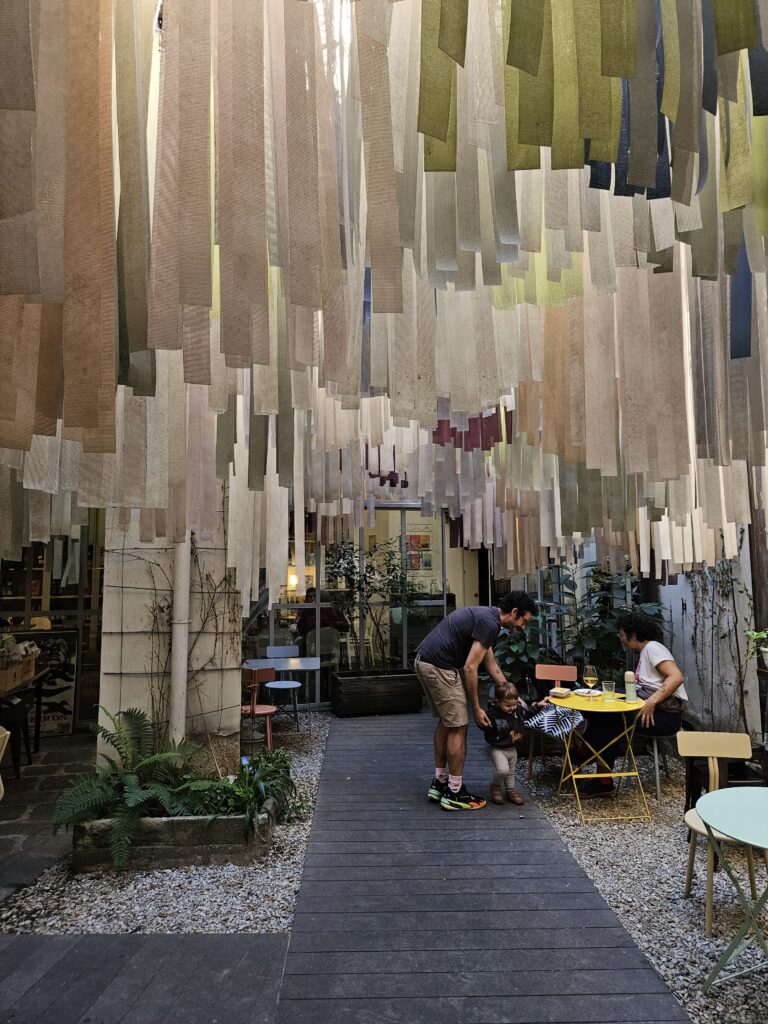
We wrapped up the afternoon at Libreria Brac, a spot so discreetly tucked away near the Uffizi that most tourists walk right past its narrow entrance without a second glance. From the street, it’s unassuming, just a doorway into a world of contemporary art, philosophy, and independent cinema titles. But keep moving.
The magic of Brac isn't just the books; it’s the architecture of the space itself. You’ll pass through a corridor into a tiny, stunning hidden courtyard draped in thousands of vertical fabric strips that flutter like pages in the breeze. It’s an acoustic marvel, the chaotic noise of the Florence crowds hits a wall here, replaced by the soft clink of silverware and low-humming conversation.an
While Todo Modo has its "Theater," Brac has its kitchen. This is a vegetarian and vegan haven that actually puts effort into the plate, think artisanal pasta with pistachio pesto or their famous "Piatto Unico" where you get a curated tasting of their best daily specials. It’s owned by Sacha and Melisa, he’s a chef, she’s a bibliophile, and that marriage of food and thought is exactly why it feels so personal.
It is probably one of the only place in Florence where you can fully decompress. It is quiet, it is smart, and it feels miles away from the tour groups outside.
The Showstopper: Giunti Odeon
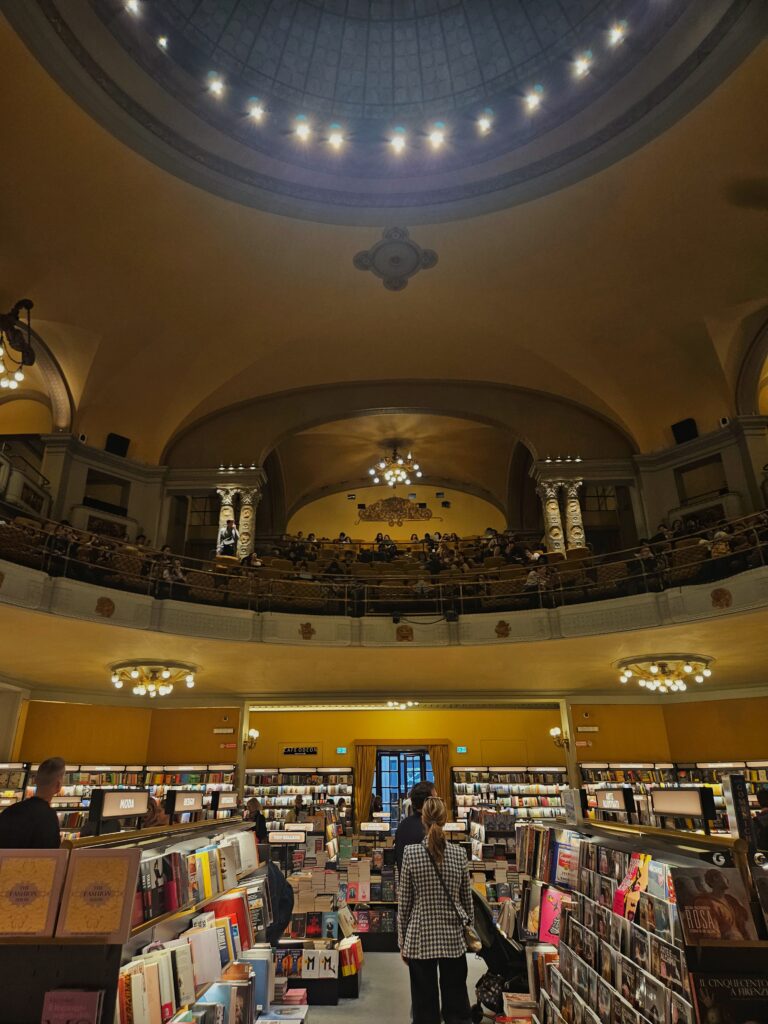
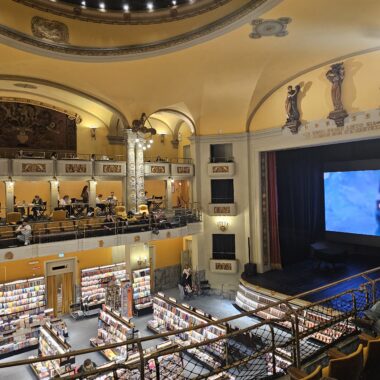
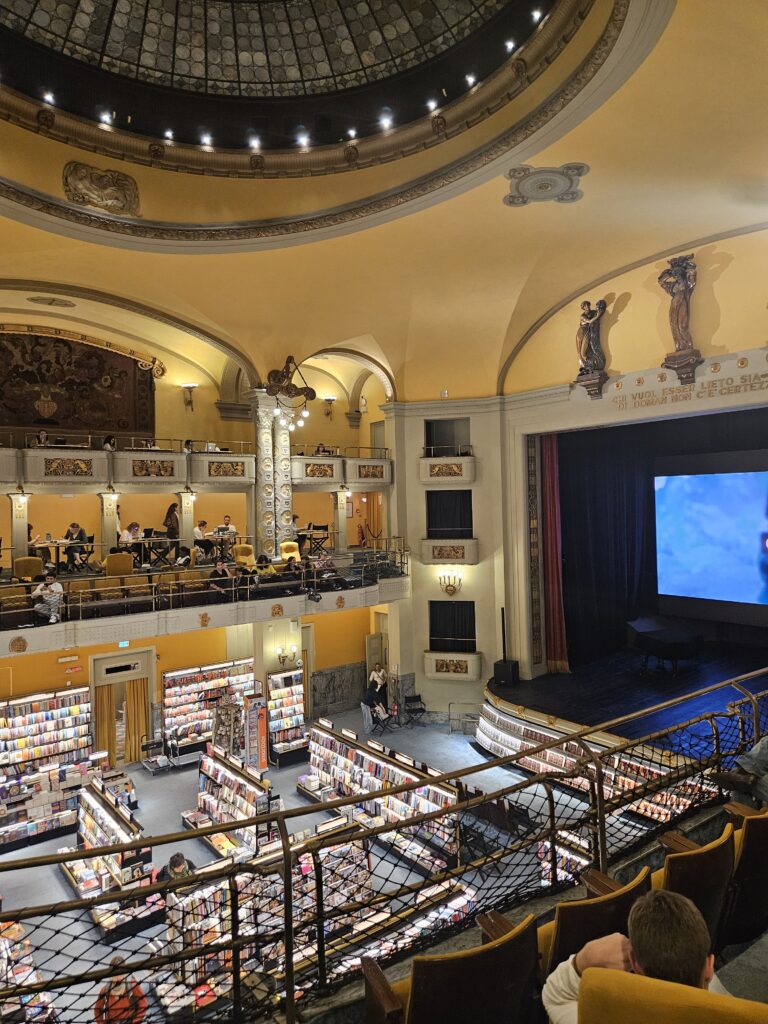
But the real jaw-dropper of the day was the Giunti Odeon. This isn't just a movie theater. It is a historic 1920s cinema complete with a massive dome, velvet seats, and stained glass that has been transformed into a stunning hybrid bookshop, bistro, and working theater.
When we walked in, "Murder on the Orient Express" was playing on the big screen. I couldn't have scripted a better moment if I tried. Watching a Hercule Poirot mystery unfold in this gilded, dramatic, Art Deco setting felt like stepping into the movie itself. This isn't a new build. For the last century (since 1922), this was the Cinema Odeon, Florence's most prestigious movie palace. Before that? It was the Palazzo dello Strozzino, a Renaissance palace designed by none other than Brunelleschi (yes, the Duomo guy). It used to be the only place in town to catch a film in its original language. Now, after a massive restoration, they have removed the stalls to add the bookstore but kept the original velvet circle seats, the stained glass dome, and the screen. You can grab a book, order a Spritz, and watch a movie all in the same breath. Do not skip this.
The Lone Stall
Walking out of the Odeon, we stumbled upon a lone stall in the middle of the piazza. Usually, my rule is: If it's a stall in a major square, keep walking. They typically sell cheap imports. But something caught my eye here: the glimmer of real history.
It feels poetic because this family-run spot is operating exactly where the ancient Mercato Vecchio (Old Market) used to stand before it was demolished in the 19th century. In a way, they are keeping the original spirit of the square alive.
They have spent years studying the great masters to create exact Renaissance reproductions. We aren't just talking about "vintage style," they are replicating specific pieces actually owned by the Medici family. It is costume jewelry, yes, but it feels substantial, historic, and incredibly chic. I picked up a ring and a necklace that look like they belong in the Uffizi, not on my dresser. I’ve pinned the exact location of this stall on my map. (It’s easy to miss if you don't know which corner to look for).
My Tip
Don't bother haggling. I watched some Americans do it and they failed. The owner is lovely, but he gets way too much business to argue over €5 or €10. He knows the value of his work, and honestly, for a piece of "wearable history," the price is already fair.
Evening: Spa & The White Truffle Dinner
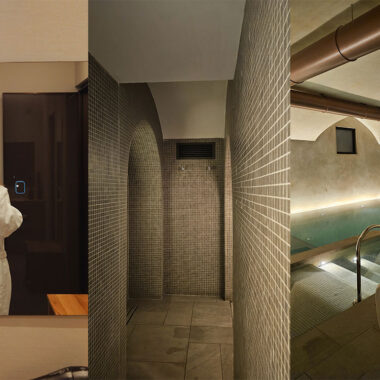
We ended the day back at Palazzo Portinari Salviati, and honestly, we didn't need to leave. First, we checked into the Vita Nova Spa. This spa is located in the ancient cellars of the palazzo. We spent 2 hours soaking in the history (literally) before dinner.
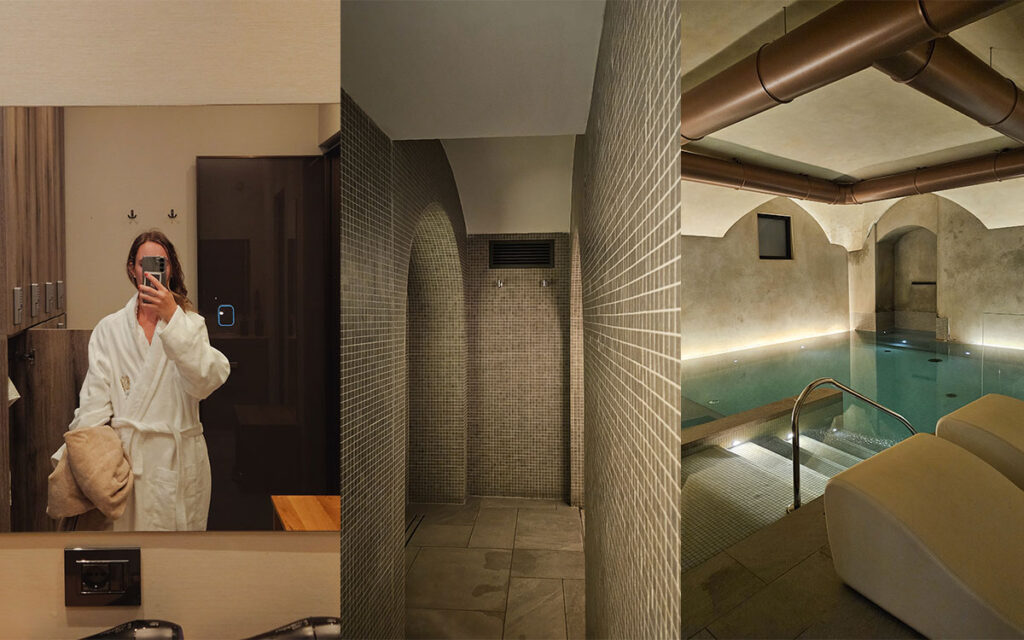
Florence Spa in a Renaissance Palazzo: Vita Nova
Vita Nova spa is hidden beneath the palazzo in a secret 500-square-meter cellar carved into history itself. The spa reminds you why Palazzo Portinari Salviati is a true luxury hotel in Florence. We started with a glass of mixed berry fusion and a gentle unwind through the scenic relaxation room. Lounge chairs faced rotating images of Tuscany’s most beautiful landscapes, designed for indulgence and unplugging. The ritual continued with the sauna, steam room, and a 34°C treated pool to improve circulation with jets and a soft hum of history in the air.
I indulged in the Flower Sphere Cocoon Ritual: candle oils, marine clay, and a touch of Florentine alchemy in every drop. It was part massage, part facial, completely restorative. For someone with super sensitive skin, this was a revelation: no tingling, no reactions, only calm.I later learned it was all natural products from Seed to Skin Borgo Santo Pietro, no wonder my skin felt reborn. Each product felt like a story from the divine cleanse to the midnight miracle. It was a treatment so restorative it was less skincare and more rebirth. Florence may have mastered art and architecture, but here, the palazzo has perfected the pause.
Dinner was at Salotto Portinari, and since it was October, we indulged in the White Truffle menu. Eating truffle pasta in the home of Dante’s muse is one of those "pinch me" moments that reminds you why you came to Italy in the first place.
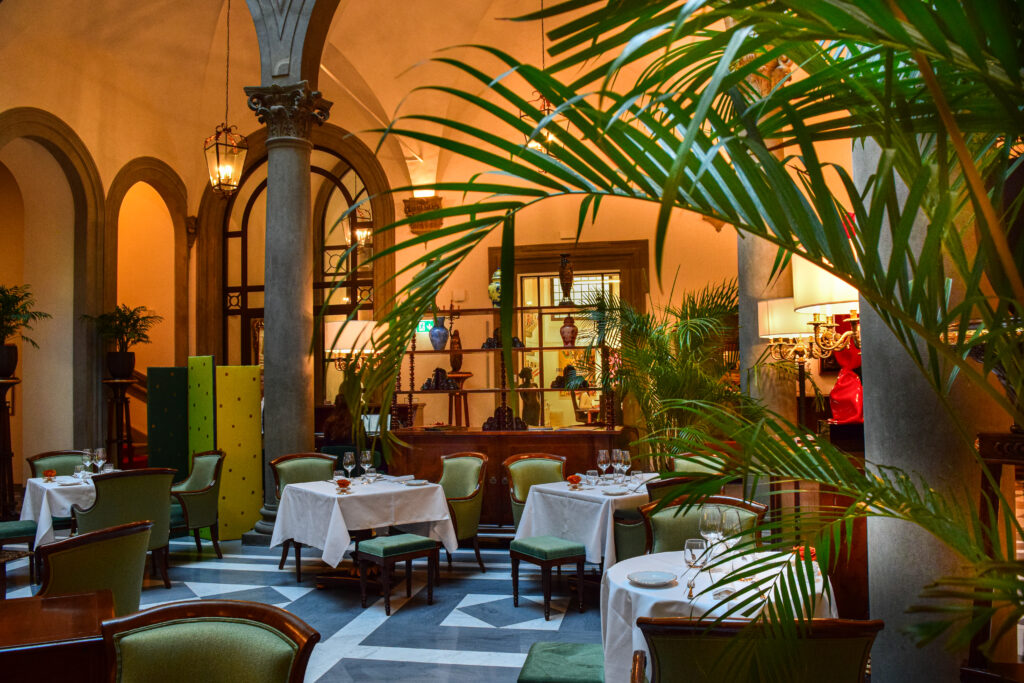
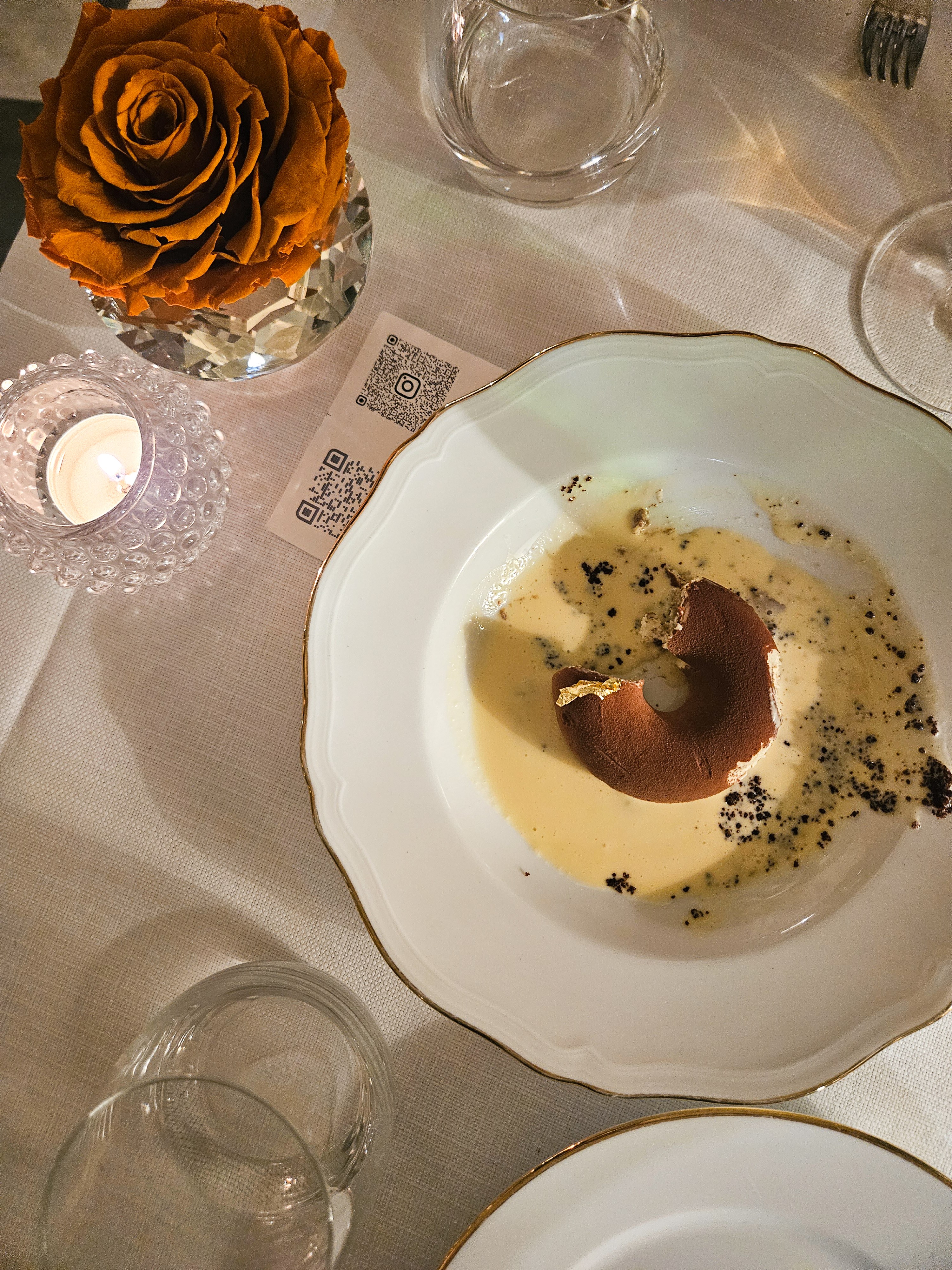
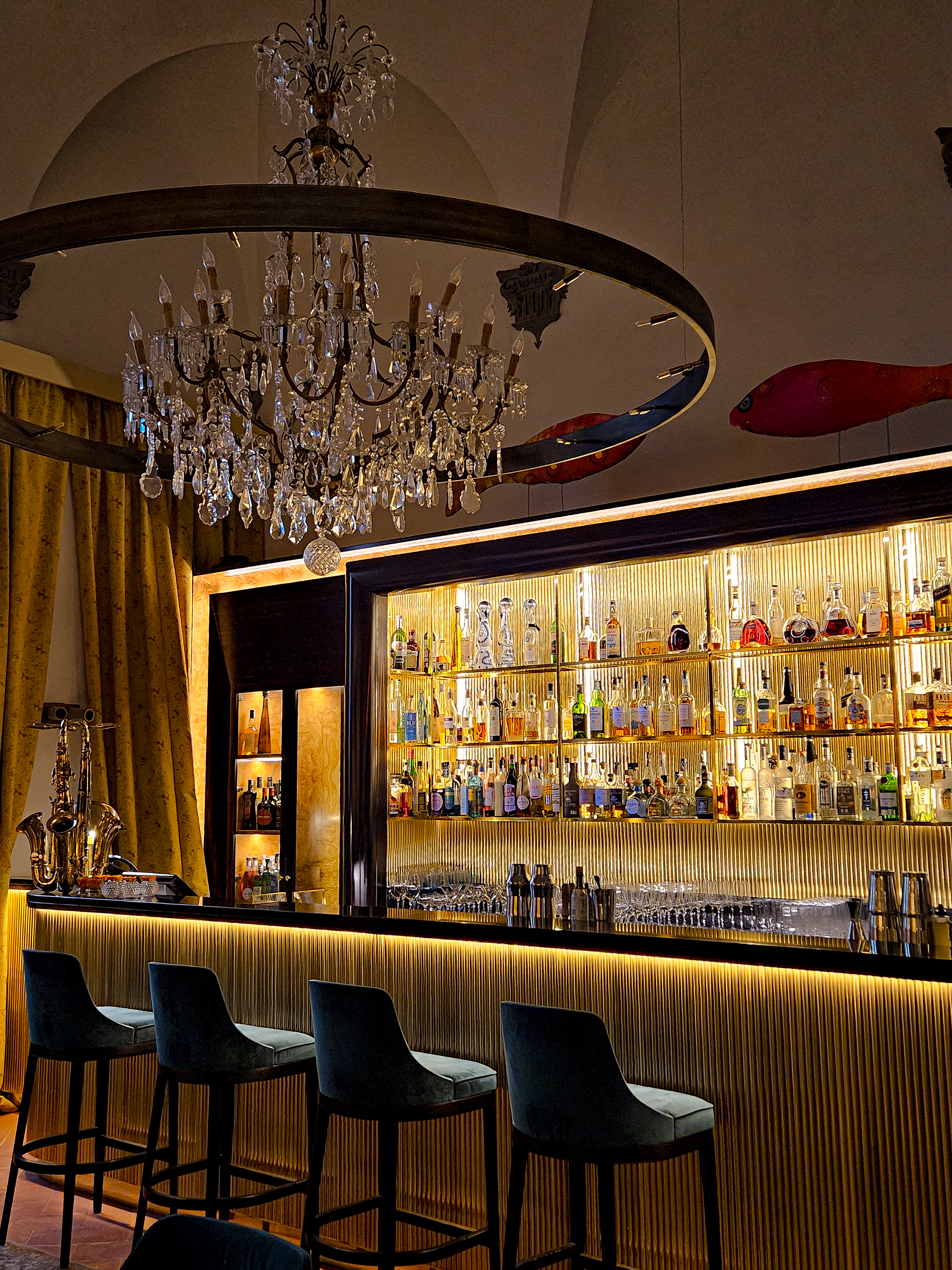
White Truffle Season in Florence: Salotto Portinari Review
By evening, Florence had softened into that honey-lit hush it does so well, and we traded the frescoes of our suite for the glow of Salotto Portinari Bar & Bistrot, one of two dining options at Palazzo Portinari Salviati, both helmed by Michelin-starred chef Vito Mollica. With Sibby in tow, we skipped the hotel’s Michelin restaurant, ATTO di Vito Mollica, and embraced the Salotto’s elegant, relaxed magic, perfect for a little baby-led chaos. It was white truffle season, and I savored Chianina beef tartare with aged pecorino, hazelnut, and lavishly shaved truffles, while Sibby navigated her “assisted walking” phase, sending us on corridor laps between bites of veal ravioli del plin burro e salvia con spuma al parmigiano reggiano. We finished with tiramisù, eaten in shifts, laughing at how un-Michelin our rhythm looked, while Pat lingered over a Negroni and I escorted Sibby back to her carpet-and-fresco kingdom. Dining beneath 15th-century vaults, or chasing a baby through them, you still feel part of something timeless at Palazzo Portinari Salviati, a place in history, even if yours comes with a stroller parked beside the marble.
~ Day 3: Historic Pharmacies & The Orange Wool ~
The Oldest Café
We started our final day at Gilli in Piazza della Repubblica. You can’t write a guide to Florence without mentioning it. It is the oldest café in the city (founded in 1733!), and while the prices on the terrace are steep, standing at the marble bar for a cappuccino and a sfogliatella is a rite of passage. It’s where you go to people-watch and pretend you’re in a Fellini film.
The "Museum" Store (Map Exclusive)
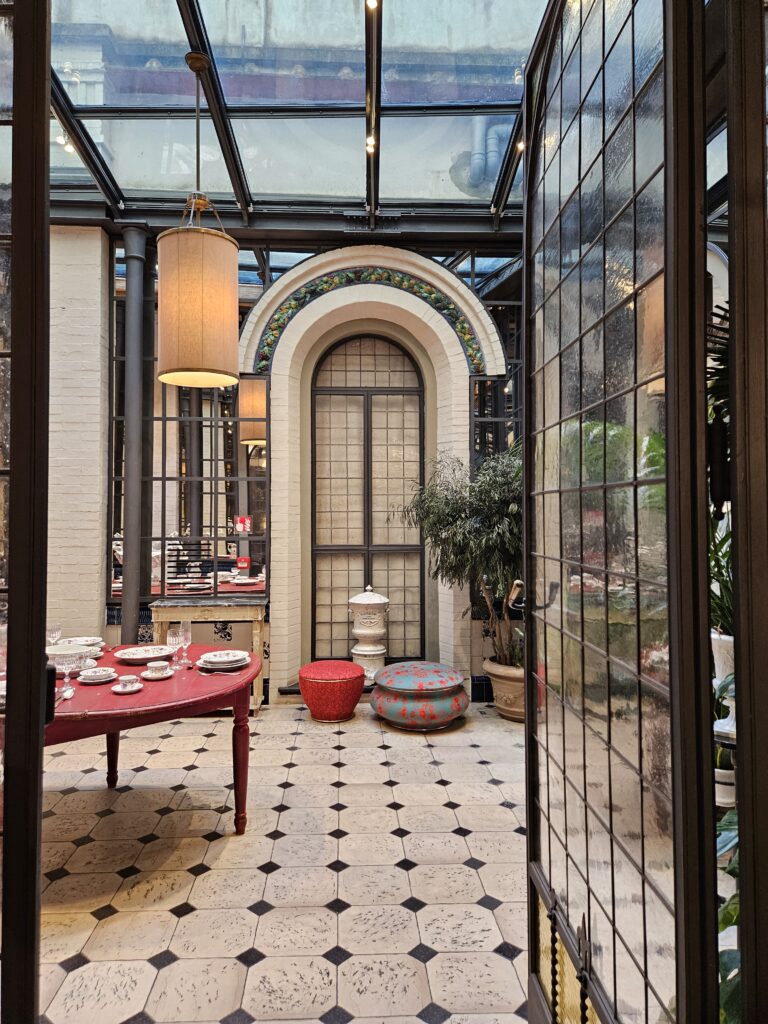
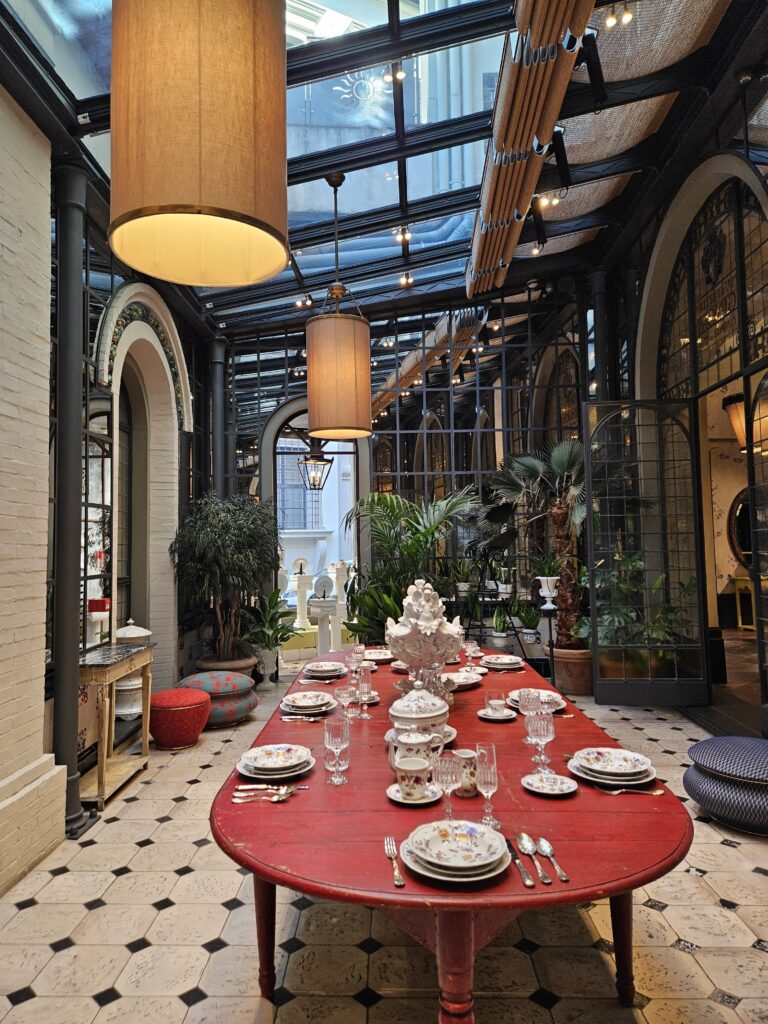
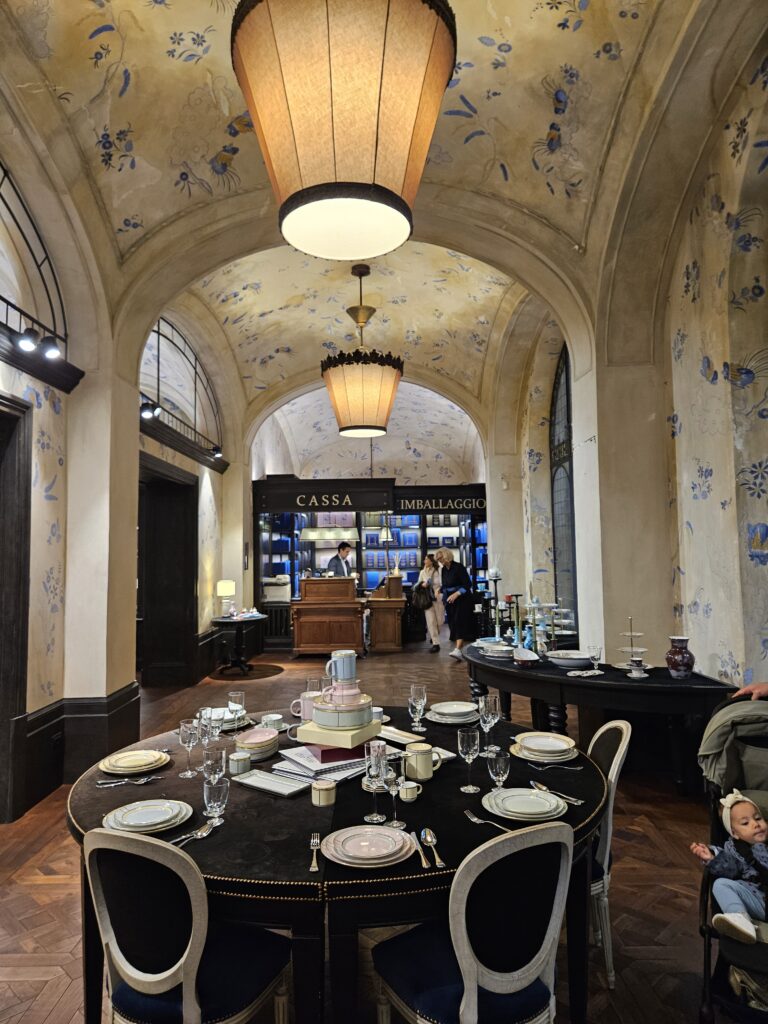
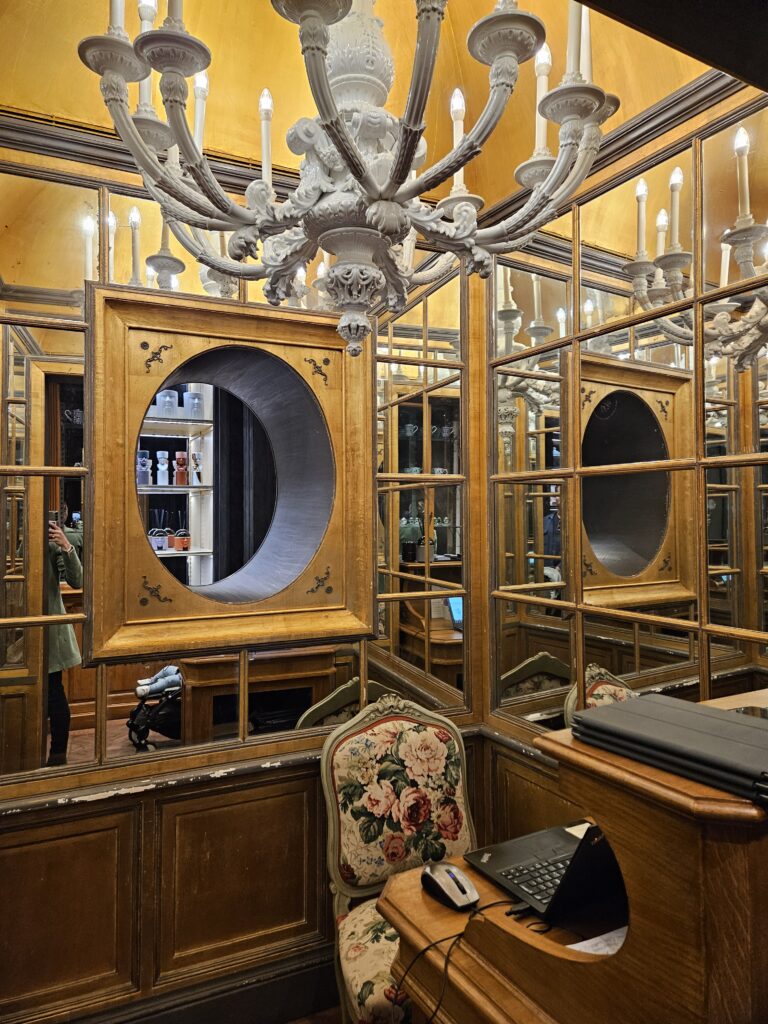
Just around the corner, we visited a porcelain showroom that feels like the Louvre. The brand is legendary (if you know, you know) and the showroom is a labyrinth of hand-painted, painfully beautiful art. Most tourists walk right past the entrance. We spent an hour just wandering the rooms. I’m not going to drop the name here because I want to keep the crowds away from my favorite quiet browsing spot, but I have pinned the exact location on my map. It is a non-negotiable stop for design lovers.
The Hidden Library
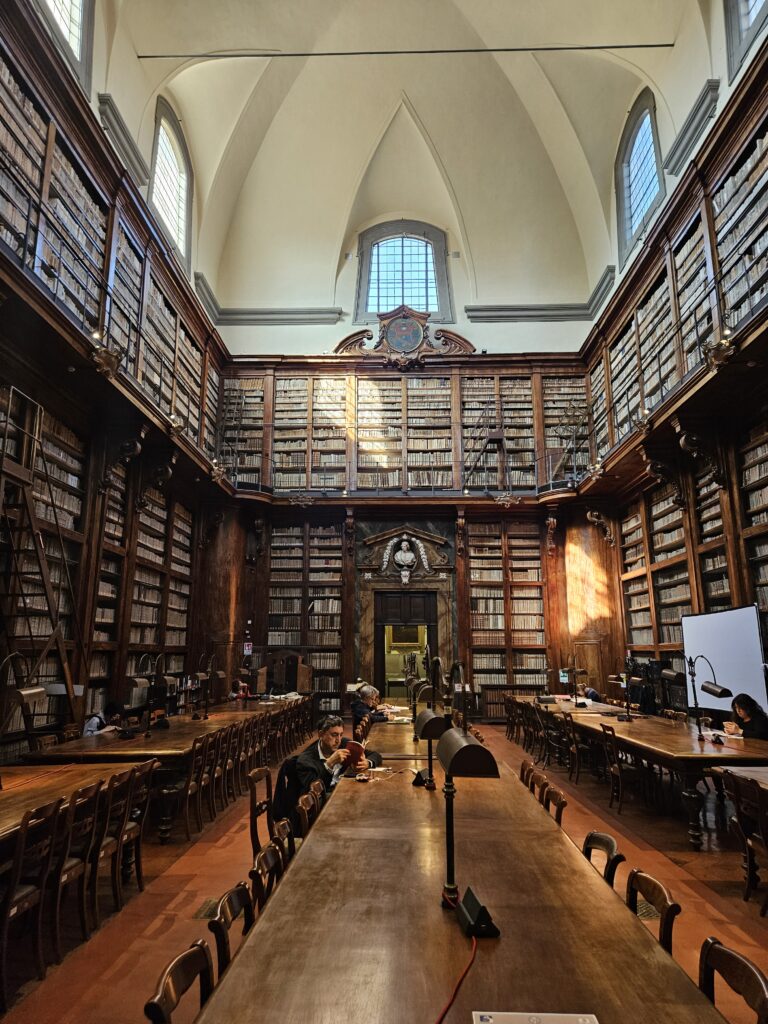
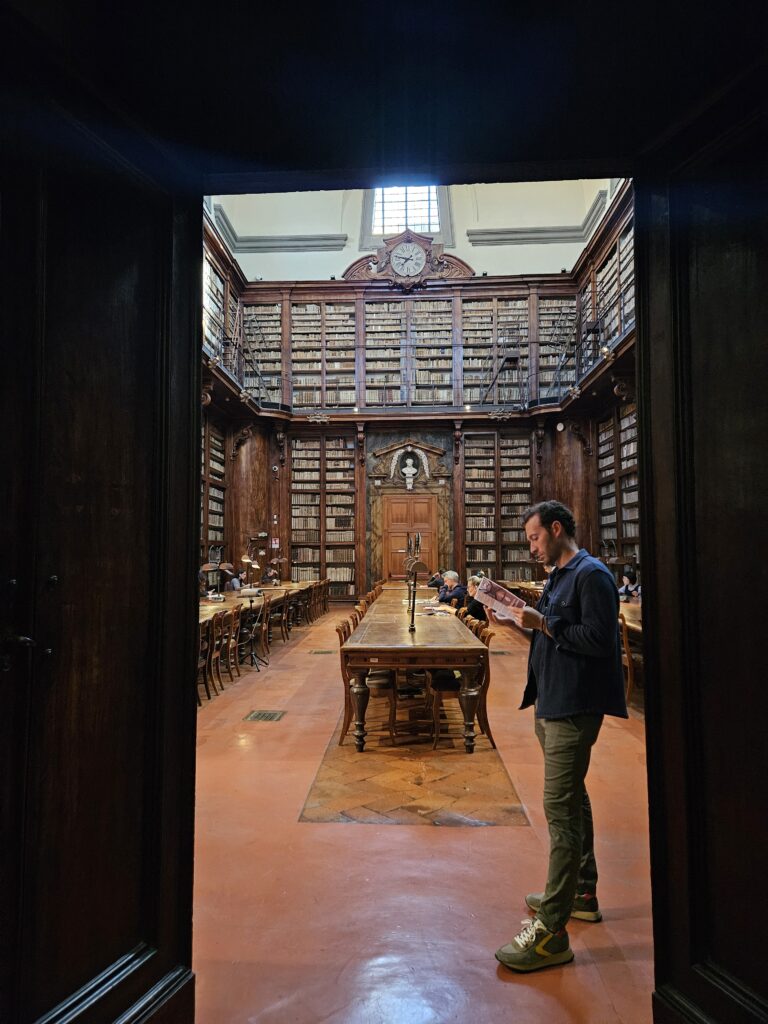
Walking into the Biblioteca Marucelliana, we were the only people there who weren’t locals deep in research. This place is on Via Cavour, dead center of Florence, yet it was total silence. It is stunning. Think floor-to-ceiling wood shelves and that intoxicating smell of centuries-old paper.
An Italian man actually stopped me to geek out about an exhibition of elite, vintage manuscripts they were setting up. I can’t remember the specific technical terms he rattled off, but that’s the vibe here: it’s where true book aficionados get cornered by people spilling their hearts out about antique bindings and rare prints.
We kept the visit short. Bringing a baby into a "Cathedral of Silence" is an extreme sport. Sibby was a miracle and didn’t make a peep, but we were definitely on a parental timer before the ticking bomb went off.
Unlike the Medici libraries built for the ego of the elite, this was the first library in Florence opened specifically for the public. The inscription on the front literally translates to "for the use of the public, especially the poor." It holds the "Mare Magnum," a massive encyclopedia of knowledge, and a copy of every book ever printed in Florence.
The Fotoautomatica
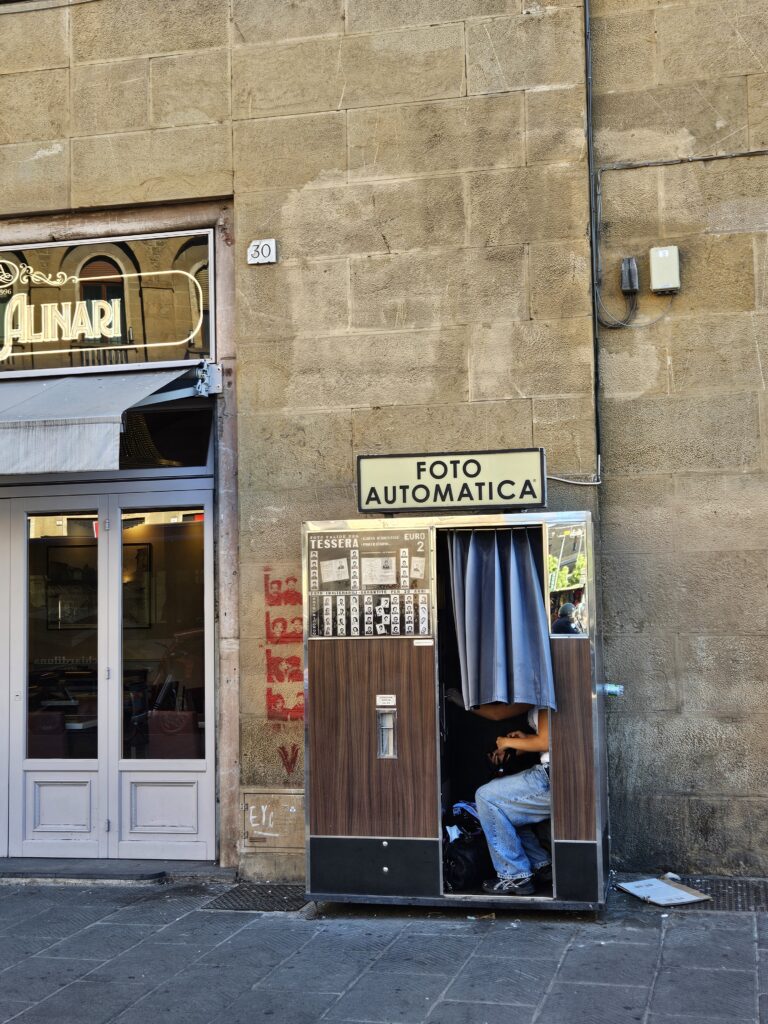
Found another of the 5 fotoautomatica vintage photo booths near Santa Maria Novella. These can be surprisingly hard to find when you actually want one (usually when you have the perfect outfit and a pocket full of €2 coins). I made it my mission to track them down, a journey I chronicled in my dedicated Fotoautomatica Scavenger Hunt guide. I’ve also pinned every single working booth on my Florence off the beaten path Google Map. If you want to create a full black-and-white photo diary of your trip, you need this map.
The Oldest Pharmacy
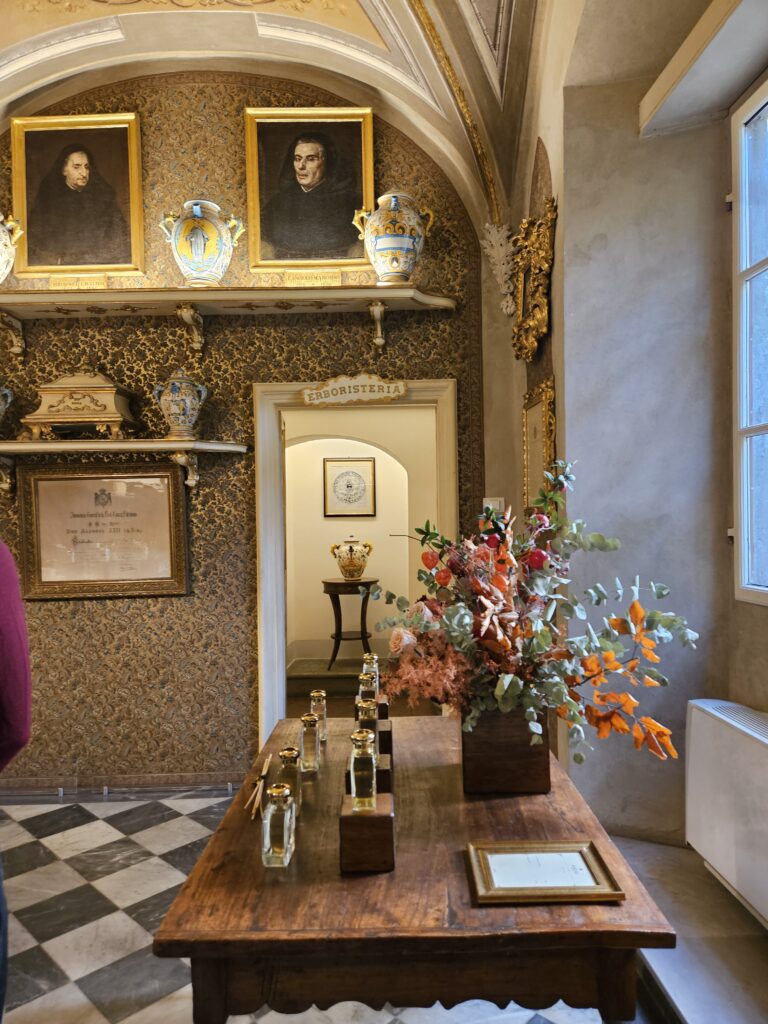
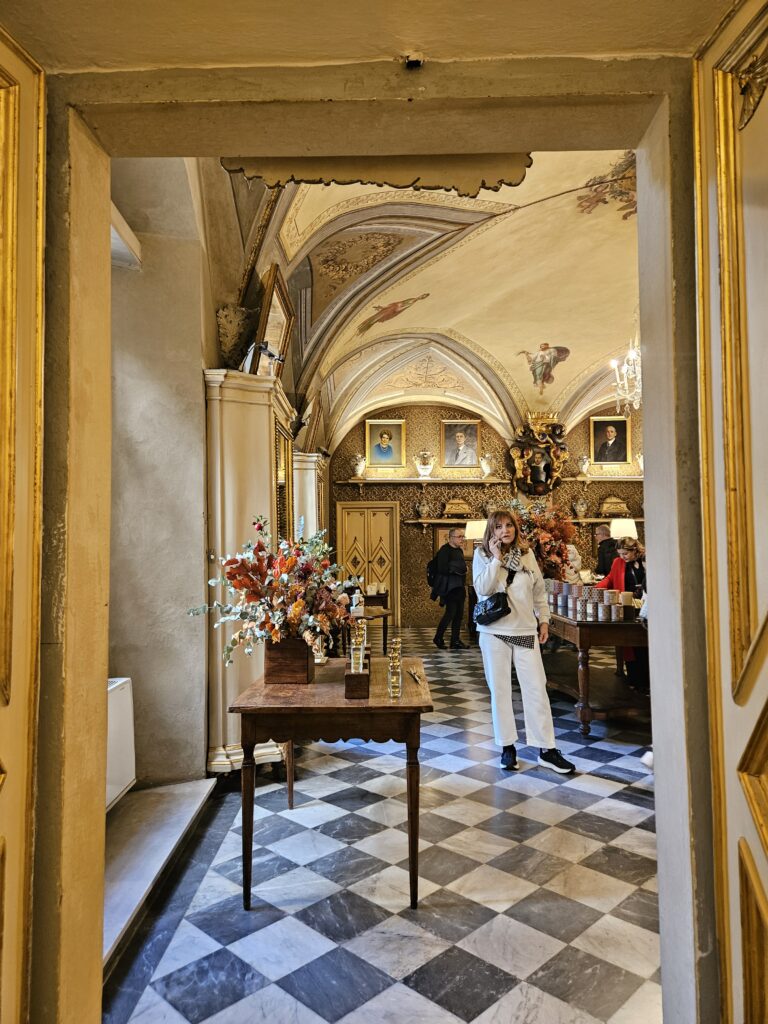
As the world’s oldest pharmacy (1221), Officina Profumo-Farmaceutica di Santa Maria Novella is a mandatory sensory experience that blends dramatic Renaissance architecture with the intoxicating history of artisanal scent. While it is undeniably crowded, the ability to buy 13th-century monastic remedies inside a deconsecrated chapel makes it an essential stop for any Florentine itinerary.
Let’s be honest: half the crowd is only here for the status symbol of that cream-and-gold aesthetic shopping bag. But as an Italian-American who has spent 30 years vetting these corners, I’m telling you: it's worth it for the history alone.
Fun Fact
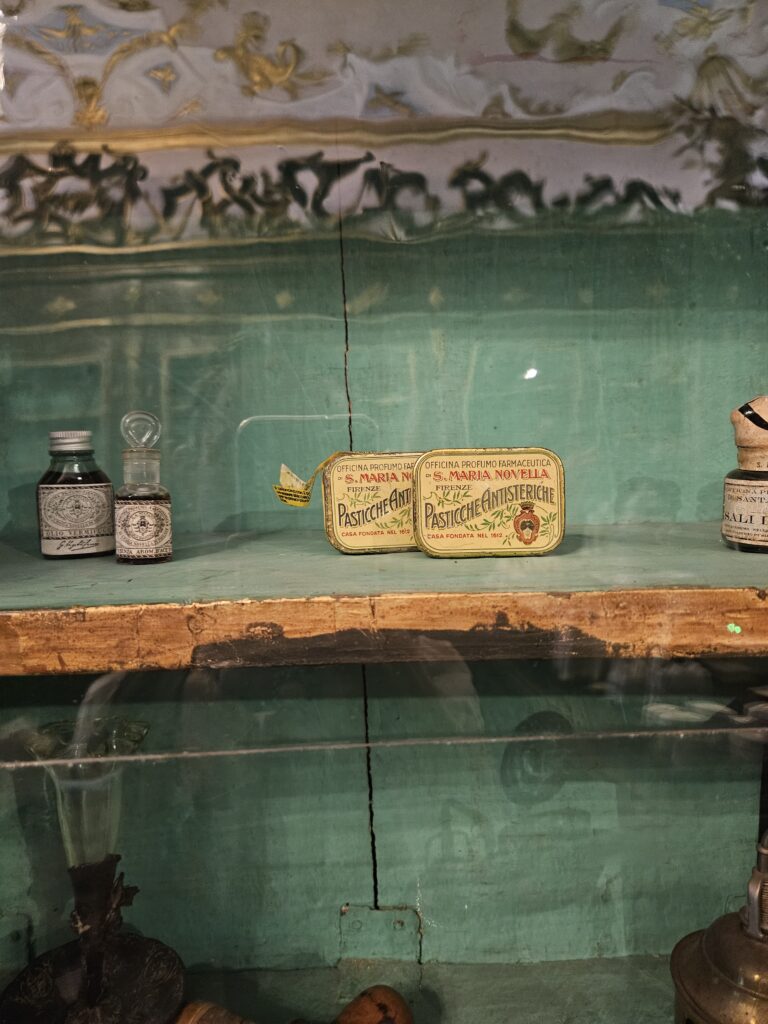
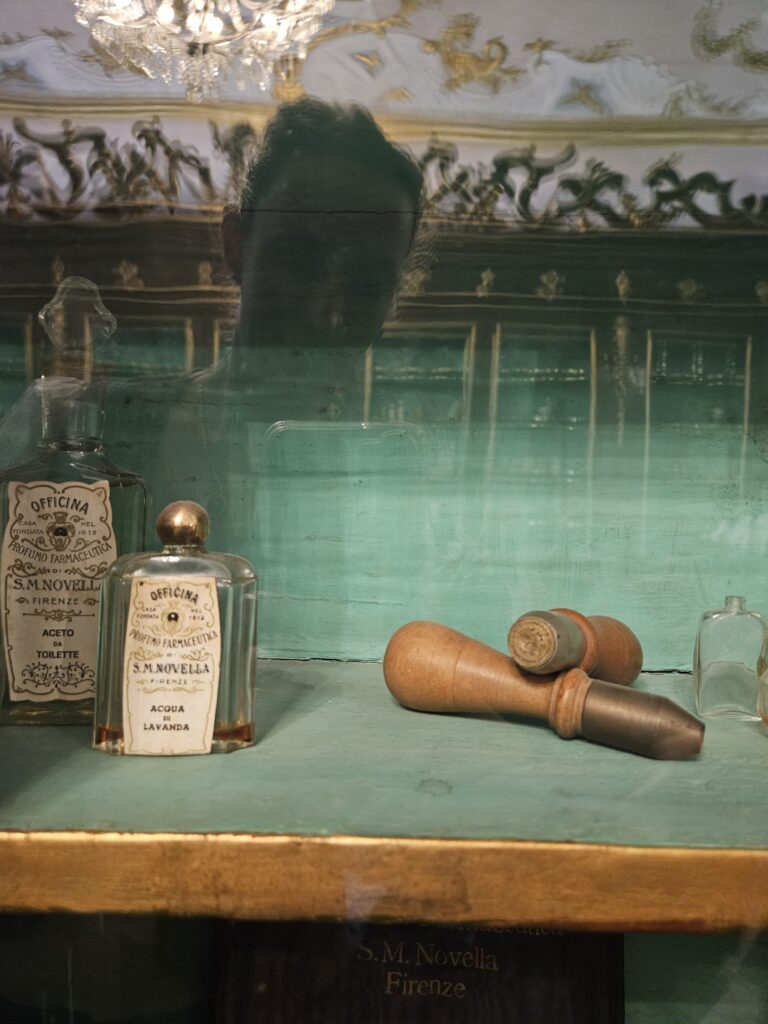
You can still buy the ‘Vinegar of the Seven Thieves’ here. Legend says grave robbers used this herbal concoction to protect themselves from the Black Death while stealing from corpses. Chic, right? They even sell ‘Acqua di Santa Maria Novella’ (formerly known as Anti-Hysteria Water). And honestly, after dodging the wall-to-wall tourists on the Ponte Vecchio all day... I’ll take two bottles.
The Insider Flex: Buy the Acqua di Santa Maria Novella. It’s the exact citrus fragrance created for Catherine de’ Medici in 1533.
The pharmacy is a masterclass in vaulted arches and 16th-century ceramics—which, as you know, is my total physical weakness. While I was busy swooning over the vaulted arches, an architectural weakness I blame on my summers spent exploring the traditional stone structures of my Puglia Itinerary, Patrick was navigating Sibby’s stroller through narrow corridors like a high-stakes game of Tetris. We survived with no broken vases.
Pizza & Crafts
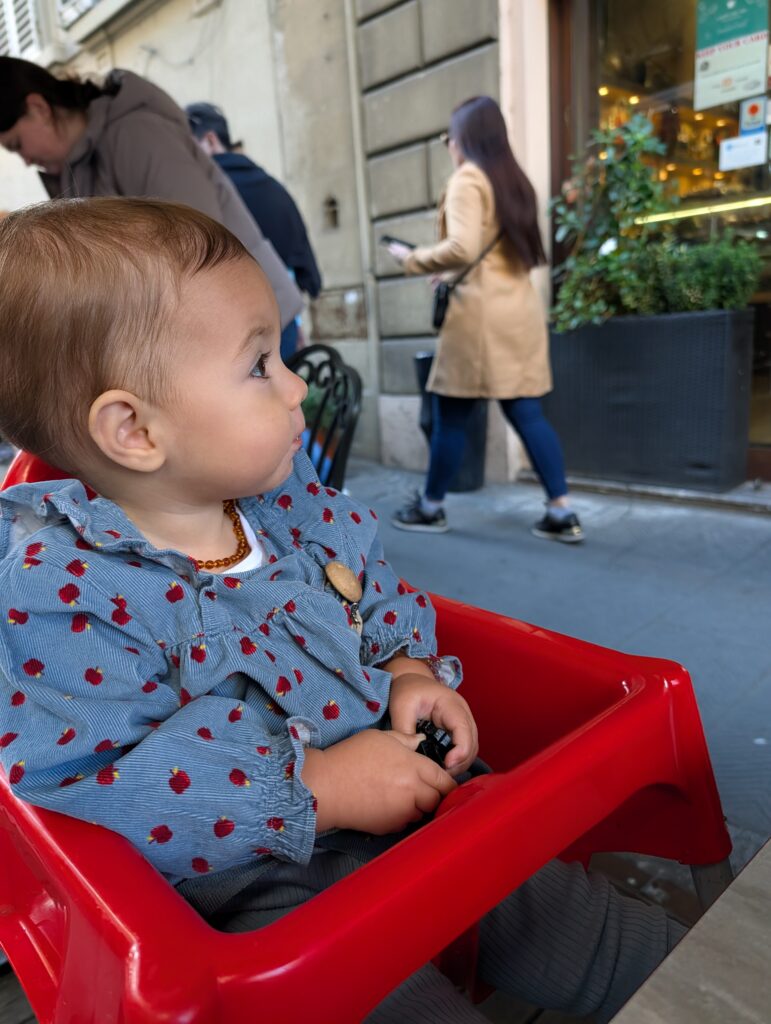
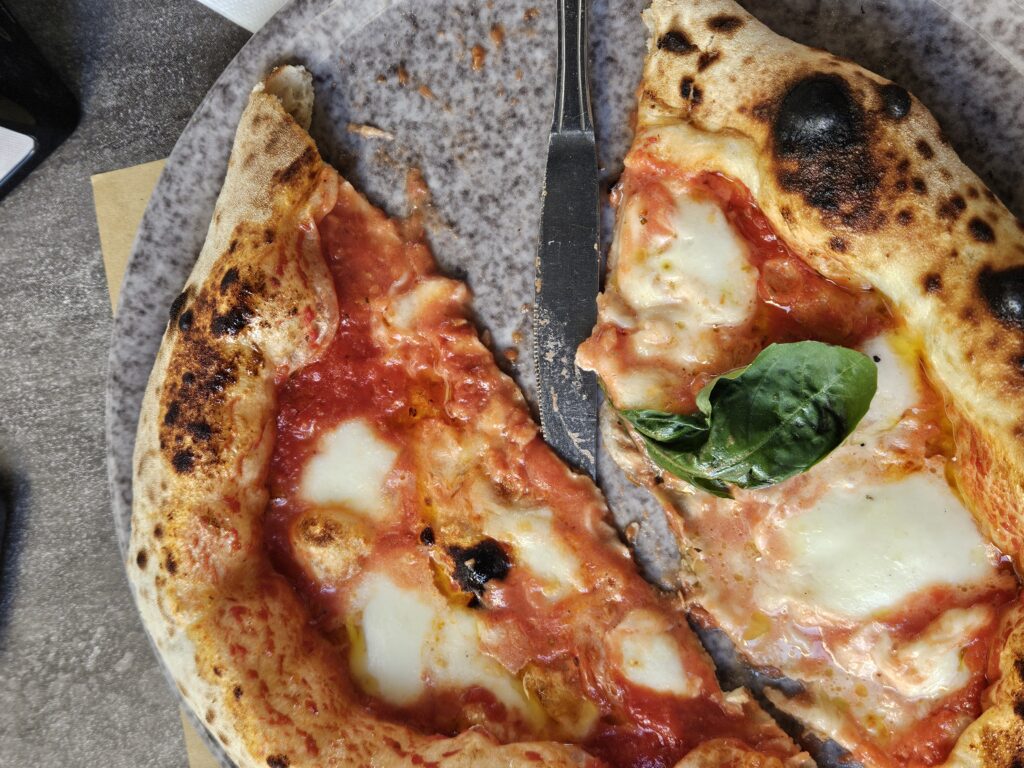
So where can you find an authentic, non-touristy experience in Florence? For a true taste of local life, skip the Duomo-adjacent traps and head to Caffe Pizzeria del 900 for a simple, mouth-watering lunch, followed by a visit to Rilegatori di Libri A. Cozzi. These two stops offer a perfect blend of unpretentious Florentine flavors and centuries-old craftsmanship that hasn't changed since the 1800s.
If you’re looking for a pizza topped with edible gold leaf or a waiter who speaks five languages and tries to pull you in from the street, keep walking. This place is simple, delicious, and aggressively authentic. Here you’ll find locals arguing over the news while the scent of wood-fired dough fills the air.
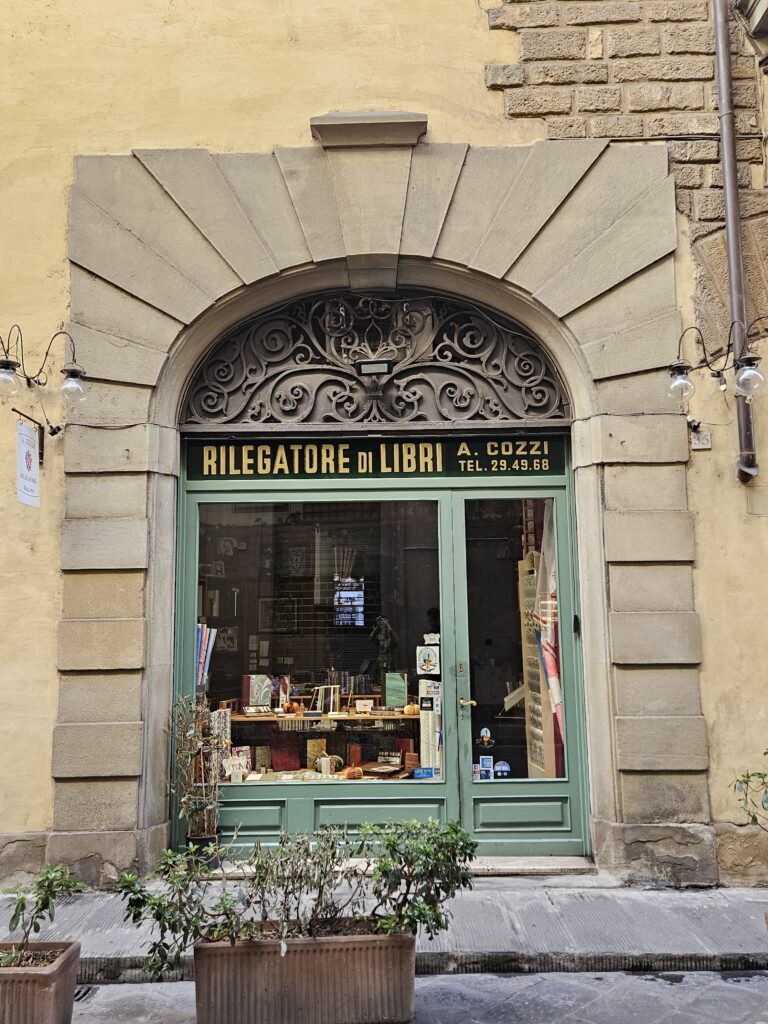
After lunch, we ducked into Rilegatori di Libri A. Cozzi, an 18th-century Florentine institution where the meticulous art of hand-binding and paper marbling remains virtually unchanged since the shop opened in 1791. Watching the masters at Rilegatori di Libri A. Cozzi marble paper is the quietest, most intimate art experience in the city. It’s the perfect palate cleanser after you’ve spent the morning battling the crowds at the Accademia to see the David.
Here you can probably purchase one of the most authentic souvenirs in Florence. It is a quintessential stop for anyone wanting to experience the city's "Maker" culture, which is tucked away behind the heavy wooden doors of the Oltrarno district. It’s an active workshop where you can watch as artisans use traditional tools to marble paper. They use a technique where they float pigments on a "gel" made of seaweed, very cinematic, and then dip the paper to create those intricate Florentine swirls.
After you’ve grabbed your gelato in Piazza della Passera, you might want to disappear for an hour or two with a notebook. While I’ve mentioned the main artisan spots here, I’ve detailed exactly where to find the city's most quiet, cinematic bookstores for those moments when you just need to hear yourself think.
The Hunt for Casentino Wool
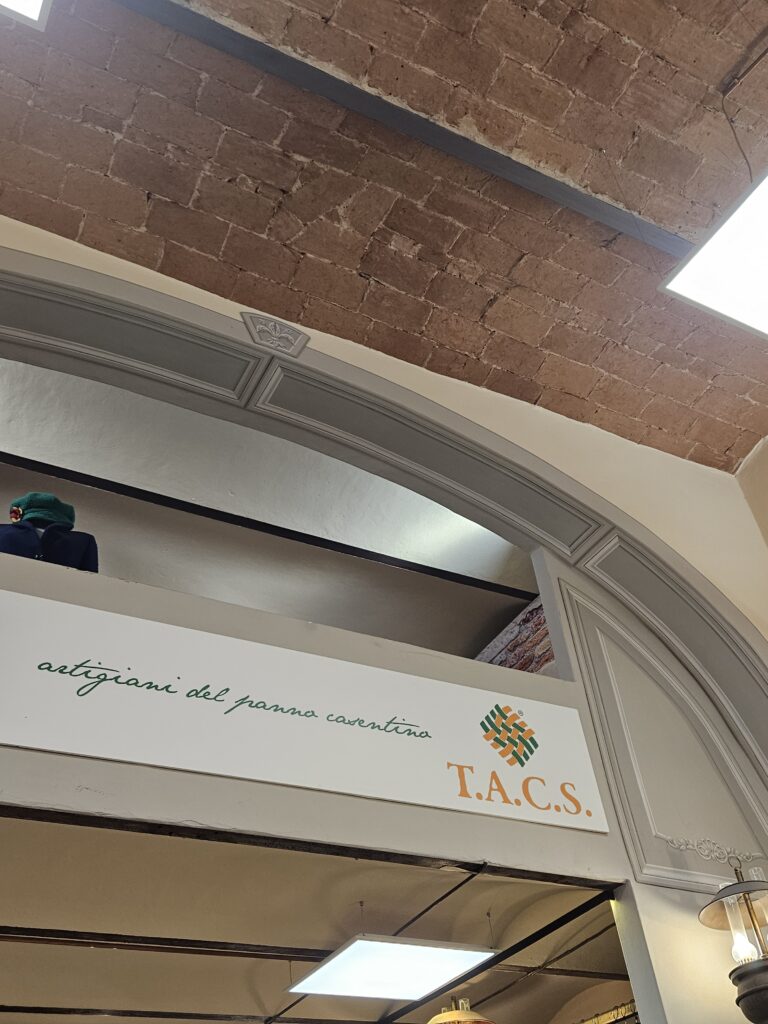
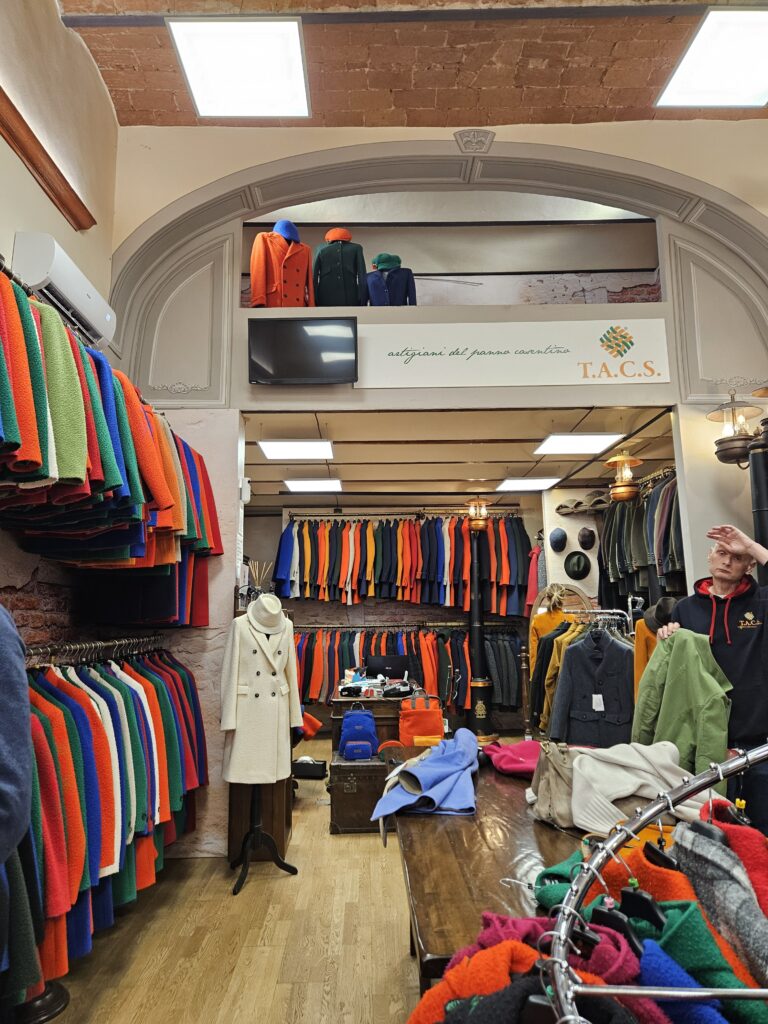
Casentino Wool: The IYKYK Guide to TACS Florence
We ended at TACS for the holy grail of Tuscan outerwear: Casentino wool. This 14th-century fabric has a signature "pilled" texture that looks intentionally worn out. This is the ultimate "IYKYK" flex, a niche luxury discovery that reminds me of the high-end, rare finds I unearth during my St. Barth 7-Day Itinerary. If you’re looking for a generic puffer jacket, go to a mall; if you want the coat that King Charles and Audrey Hepburn both famously donned, you come here.
My mom and I shopped at TACS for a piece of Tuscan DNA. Originally developed in the Middle Ages for shepherds and monks who needed to survive the brutal Apennine winters, Panno Casentino is nearly indestructible and water-repellent. The signature "bobbly" or curly texture, created by a process called rattinatura (brushing the wool with steel teeth), was designed to make the fabric last longer against the elements.
Today, wearing a TACS jacket in "goose-beak orange" (arancio becco d'oca) or "flag green" is the sartorial equivalent of a secret handshake among Florentine aristocrats.
Florence isn't just a museum of the Renaissance. It’s a living, breathing city of makers. After 32 years of exploring, I can tell you: you just have to know which door to knock on to find Florence off the beaten path.
Want to skip the tourist traps and eat where the natives eat? I’ve spent decades vetting these corners so you don't have to. Download my full Florence off the beaten path Google Map directory here for the complete list of 140+ hidden artisans, wine windows, and no-frills restaurants.
Ciao for now.
Florence Off The Beaten Path: Frequently Asked Questions
The best way to escape the crowds is to head into the Oltrarno district. Instead of the major galleries, visit Rilegatori di Libri A. Cozzi to watch artisans practice the 18th-century art of hand-binding and paper marbling. You can also hunt for original Fotoautomatica analog booths to get a perfectly imperfect chemical-developed photo strip—the ultimate non-digital souvenir.
Skip the street stalls and look for historic institutions like Rilegatori di Libri A. Cozzi for hand-marbled paper or TACS for traditional Casentino wool jackets. For jewelry, the small family-run stalls near the Giunti Odeon often replicate actual Renaissance pieces owned by the Medici.
Honestly? Not really. The sidewalks are super tight and the suffocating crowds make it incredibly hard to navigate with a stroller. We found that having Sibby in tow slowed us down significantly, but it is what it is, you just have to be strategic. The Sant'Ambrogio neighborhood is far more navigable than the gridlock around the Duomo. For a break, the Palazzo Portinari Salviati offers wide, accessible halls and the Vita Nova Spa, while the Biblioteca Marucelliana and Todo Modo provide a quiet, accessible sanctuary for a quick culture fix.
Locals tend to congregate around the Sant'Ambrogio Market. For unpretentious, wood-fired pizza, Caffe Pizzeria del 900 is a staple. If you want traditional Tuscan "peposo" (peppered beef stew) or "ribollita," Trattoria La Casalinga has been the working-class benchmark since 1963.